
Reviewed · MOUNT RAINIER TOURS
Mount Rainier National Park Day Tour from Seattle
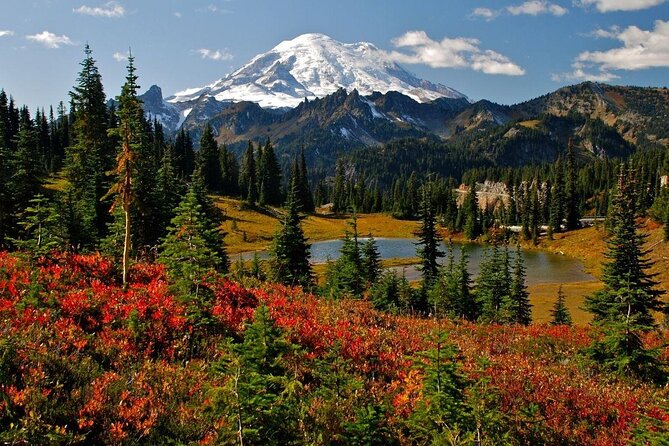
Mount Rainier makes a Seattle day feel bigger. I like the round-trip pickup from multiple Seattle neighborhoods, and the time at Paradise that gives you a real shot at snow, wildflowers, and big views. The main drawback to plan around is weather, when clouds can hide the mountain and tighten what you can do.
This is an all-day outing, roughly 10 to 11 hours, with a small group size (max 12). In warmer months you’ll hit waterfalls and viewpoints with short walks, and in colder months the day pivots to Longmire and time on the Wonderland Trail area.
In This Review
- Key things I’d pin to your map
- The big idea: why this Mount Rainier day tour works without a car
- Price and logistics: what you’re really paying for
- Pickup timing in Seattle, and why the start time matters
- Longmire Museum: a quick history hit before the big views
- Christine Falls viewpoint: a short stop that can still pay off
- Narada Falls: the biggest car-accessible waterfall moment
- Paradise Loop and the Henry M. Jackson Visitor Center: the heart of the day
- Reflection Lakes: the quick mirror shot
- Winter route: Longmire Museum plus Wonderland Trail time
- Guided stops that feel paced, not rushed
- Vans, comfort, and the small-group reality
- English narration versus mixed-language groups
- The weather factor: when clouds change everything
- What you’ll do at the mountain: short hikes and optional effort
- Should you book? My practical take
- FAQ
- How long is the Mount Rainier National Park day tour from Seattle?
- What time does pickup start?
- What stops are included during summer?
- What is different in the winter itinerary?
- Is Mount Rainier National Park admission included in the price?
- What food and drinks are included?
- What vehicle and group size should I expect?
Key things I’d pin to your map
- Door-to-door pickup from a long list of Seattle and SeaTac locations, so you skip the rental-car math
- Paradise Visitor Center time for the most famous views, plus the chance for a short hike depending on conditions
- Iconic waterfall sequence built around Narada Falls and nearby stops, designed for maximum sightseeing per hour
- Seasonal swap of activities: summer sightseeing with short hikes, winter shifts toward snowshoeing and Wonderland Trail time
- Small group limit (12 travelers), which usually means fewer bottlenecks at pullouts and viewpoints
The big idea: why this Mount Rainier day tour works without a car
If you want Mount Rainier but don’t want the headache of driving, parking, and guessing transit times, this tour is built for you. You start in Seattle, ride north as a group, and return the same day. That means your biggest job is picking what time in the park matters most to you, then showing up with the right clothes.
The itinerary is designed like a highlight reel, but not the lazy kind. You get a sequence of stops that cover the park’s most recognizable looks, from the Longmire area to the Paradise zone, plus classic waterfall access. Even the short stops matter because they’re placed to give you photo angles along the main roads.
The trade-off is timing. You will be in the van a lot. So if you hate car rides, or if you need lots of independent wandering, you’ll likely feel rushed. But if you want the highlights without logistics, it’s a smart way to spend a day.
Price and logistics: what you’re really paying for
The price is $148 per person for a 10 to 11 hour day. On paper it sounds steep until you break down what’s included:
- Mount Rainier National Park admission
- Professional transportation (vehicle type depends on group size)
- A professional driver and guide (or driver-guide)
- Snacks and water (granola bar and bottled water)
- Lunch sandwich (most likely)
- Seasonal access to specific featured stops like Longmire Museum, Narada Falls, Paradise Visitor Center, and Reflection Lakes
That package matters. Admission plus a guided day with transport from Seattle usually costs more than you’d expect once you add up gas, possible parking hassle, and buying tickets on your own. Here, the structure is the value: you don’t have to think about which road to take next.
Just know there’s no magic control over conditions. When visibility is bad, you might still do the stops and trails, but you won’t get the dramatic mountain backdrop you were hoping for. That weather reality shows up in the experience for anyone booking Mount Rainier day trips.
More Mount Rainier days from Seattle:
- Mt. Rainier National Park Highlights Tour
★ 5.0 · 3,156 reviews - Mt. Rainier Day Tour from Seattle
★ 5.0 · 1,828 reviews - Best of Mount Rainier National Park from Seattle: All-Inclusive Small-Group Tour
★ 5.0 · 805 reviews
Pickup timing in Seattle, and why the start time matters
Pickups begin at 7:45 am and you’ll find options across Seattle neighborhoods, plus airport-area hotels in SeaTac. The tour uses a set of scheduled meeting points, including (among others) Seattle Chinatown (6th Ave S), Pioneer Square downtown, and multiple downtown hotels, then later SeaTac pickups like the Courtyard Seattle Sea-Tac area.
This is a key point: your day starts early so you can reach Rainier before the best daylight window. If you’re tempted to book this late in the morning, don’t. That early start is part of the payoff.
Also, you need a reachable phone number for safety and communication. If you want a smoother pickup, double-check your booking details and pickup location accuracy ahead of time. Miss that, and you can waste part of the day waiting.
Longmire Museum: a quick history hit before the big views
Longmire is the classic south-side gateway. You’ll stop at the Longmire Museum, part of the historic Longmire district. It’s small, but it’s a useful reset button if you want a little context before jumping into viewpoints.
Timing depends on season:
- In winter (November to April), you get about 60 minutes
- In summer (May to October), it’s about 20 minutes
What you get: historic exhibits focused on the park’s natural and geological story, local animals, and early connections to the Longmire family and Native communities who traveled through the area. The museum works best as a “why this place looks like this” intro, especially when you’re about to see glaciers, lava flows, and rivers carving through the region.
The caution: it’s not a long museum day. If you’re a museum person who wants to read every label, you’ll likely wish you had more time. But for most people, it’s a helpful stop that keeps the rest of the day from feeling like random photo pulls.
Christine Falls viewpoint: a short stop that can still pay off
Christine Falls is a compact add-on stop with a viewpoint that’s designed for quick photo framing. In warmer months, it’s typically about 10 minutes, and the exact framing can depend on weather and road conditions.
This is one of those stops I think of as “bonus scenery.” It’s not the day’s main event, but it can be a welcome stretch break after longer drive time. If conditions are great, you’ll get a clean waterfall view near the road. If conditions are messy, expect it to be brief.
The practical advice: wear footwear you can move in quickly. Even with short stops, you’ll want stable shoes for uneven pullout areas and any icy patches.
Narada Falls: the biggest car-accessible waterfall moment
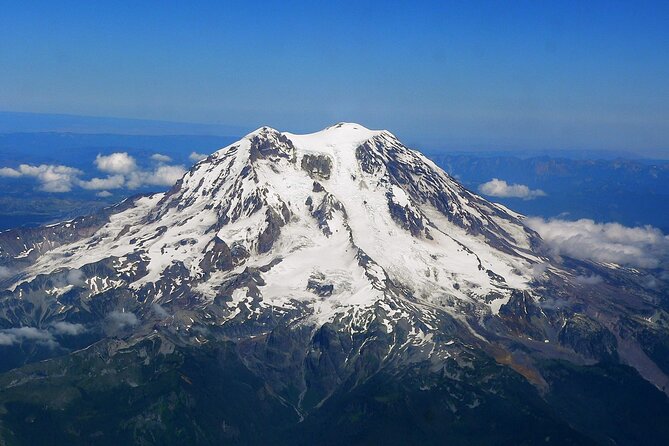
Narada Falls is a high-impact stop. It’s one of the most impressive waterfalls accessible by car in the park, and it’s close to the Paradise area. Expect about 40 minutes in summer.
Here’s what makes Narada more than just a pretty waterfall. The Paradise River drops over the edge of relatively recent hard lava, with older rock nearby. In plain terms, you’re seeing the park’s geology in action, and that helps you connect what you’re looking at to why Rainier looks the way it does today.
If you like waterfalls, this is usually the stop that makes people say the day was worth it. The time given is enough to get your photos, take a short walk, and not feel like you’re sprinting through the whole thing.
Other park days from Seattle:
Paradise Loop and the Henry M. Jackson Visitor Center: the heart of the day
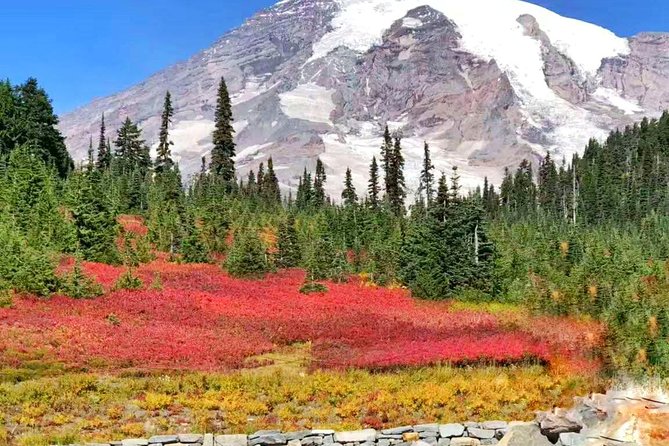
Paradise is where Mount Rainier turns into a postcard. You’ll spend around 2 hours in summer at the Paradise zone, with the Henry M. Jackson Memorial Visitor Center located in the upper parking area.
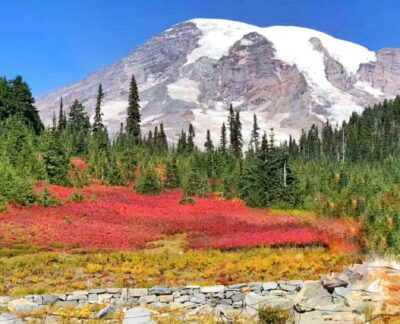
This is also where the park’s seasonal identity shows up. Paradise is known for wildflower meadows in summer, and it’s the primary winter-use area in the park. Even without the math of inches of snow, you can feel it: Paradise is the place built for winter wonderland views.
What you’ll do with that time:
- Take in major viewpoints
- Eat lunch (often included as a sandwich)
- Walk a short trail segment if conditions allow
In cold-weather conditions, you may see snow and ice, and walking slower becomes part of the experience. One of the best signs that a guide is doing their job is making sure you’re pointed toward safe, scenic options. In a few standout experiences, guides like Chris or Ryan were credited with handling weather changes and keeping time on track so you still get a meaningful hike window.
The caution: if clouds roll in, Paradise can still feel “beautiful but missing the main character.” That’s why Rainier day trips often live and die by visibility.
Reflection Lakes: the quick mirror shot
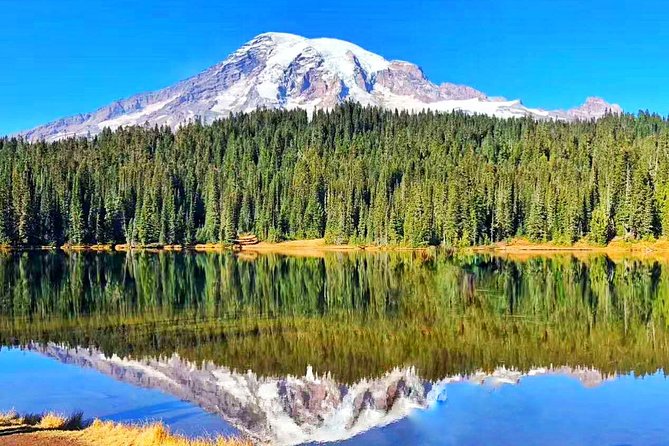
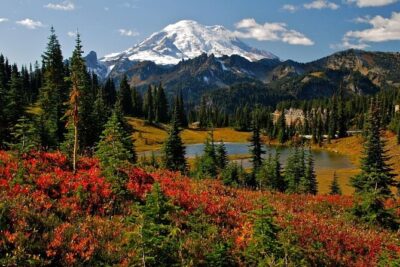
Reflection Lakes is short and seasonal, typically about 10 minutes in summer. It’s the kind of stop that can look magical when there’s little wind, because the lakes can reflect the mountain like a mirror.
But it’s also a stop with built-in limits:
- You may have only a quick window depending on the day’s conditions
- The reflection effect depends on wind and weather
Think of Reflection Lakes as a fast photo target and a moment to breathe. If you get a calm day, it’s one of the more memorable “wow, that looks unreal” spots. If the wind is up or the mountain is obscured, it becomes more of a scenic lake stop than a true mirror moment.
Winter route: Longmire Museum plus Wonderland Trail time
In winter (November to April), the itinerary changes in a meaningful way. Instead of the summer waterfall-heavy loop, you’ll go:
Seattle to Mount Rainier National Park, then Longmire Museum (about 60 minutes), then Wonderland Trail time (about 60 minutes), then back to Seattle.
The Wonderland Trail is a 93-mile hiking trail that encircles the volcano. It’s famous enough that hikers plan serious backpacking trips for permits, and it’s considered strenuous. For a day tour, you’re not doing the whole trail. But the point of this stop is the feel of the route, plus a chance to experience the winter environment where the trail begins its long loop.
The key practical note: winter schedules can change with snow. If heavy snowfall affects going uphill, the plan can shift so you enjoy views at the foot of the mountain instead.
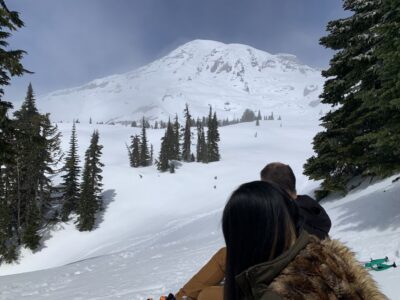
If you love winter scenery, hate crowds, and don’t mind slower footing, the winter version of this day trip can be more rewarding than it sounds on paper. The “win” is less about waterfall glamour and more about snow hiking vibes and glacier-zone atmosphere.
Guided stops that feel paced, not rushed
A good day tour should give you time to look, not just time to stop. In experiences where the guide performance is strong, you’ll notice it in pacing: no frantic herd behavior, enough time for photos, and clear movement through traffic.
Names that repeatedly show up with praise include Ryan, Chris, Nan, Chen, Jackie, Jeremy Wu, and Duan. While guides are human and every group is different, the positive patterns are consistent: they watch for weather and road conditions, they help with photos, and they try to keep your time where it matters.
Still, be realistic. A full day means you will feel the schedule. Guides can handle traffic delays and construction when they know the route well, but they can’t stretch the clock.
Vans, comfort, and the small-group reality
This tour caps at 12 travelers, which is a positive sign for comfort compared with large buses. But “small group” doesn’t automatically mean “roomy seats.”
You might be in a sprinter-style vehicle, but you could also end up in a 15-passenger van depending on the day. Several people noted tight legroom or cramped seating in smaller vans. That matters because Rainier is a long-distance round trip from Seattle, and you need your legs to survive the return drive.
My practical suggestion: if you’re tall or you hate squished seating, wear supportive footwear and consider bringing a small cushion or adjusting your seat position early. The tour runs all day, so comfort is not a luxury here, it’s part of the experience.
English narration versus mixed-language groups
Here’s the tricky bit. The tour offers English, but the actual on-the-ground experience can vary based on group language balance.
Some experiences describe narration that was mostly Mandarin, with less English detail, plus an accent that made listening difficult for some participants. Others say the guide’s English was strong and explanations were clear.
So if English-only interpretation matters to you, you should go in with eyes open. Ask your operator if your departure is likely to be mostly English-speaking, or choose a date when you expect a more mixed international group. If you’re flexible and just want the sights, the language issue matters less.
Either way, don’t assume you’ll catch every geology detail from the microphone. Bring your curiosity, and focus on the viewpoints where the sights do most of the talking.
The weather factor: when clouds change everything
Mount Rainier day trips are famous for a simple truth: if the mountain is socked in, the day still has value, but it won’t look like the brochure.
Some experiences specifically called out that the mountain was not visible due to clouds. That’s not the tour operator’s fault, and it’s why I treat “good visibility” like part of your booking criteria, not an extra.
What you can control:
- Check forecasts before you go
- Dress for changing conditions
- Keep expectations flexible, especially in shoulder seasons
What the operator can do:
- In winter, schedule changes may keep you at the foot of the mountain if going uphill is unsafe
- Guides typically adjust stops based on road conditions
Your goal for a better day is to pick a clear-weather window when possible and be ready to enjoy the places even if the peak is hidden behind fog.
What you’ll do at the mountain: short hikes and optional effort
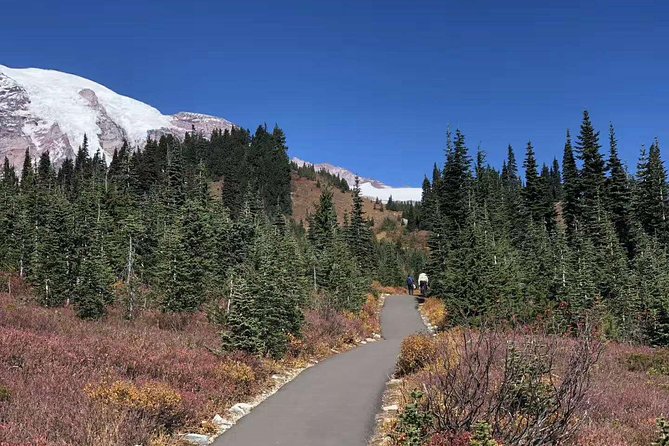
This tour includes exploring the park’s best spots by hiking or snowshoeing depending on the season. In summer, the walks are typically short, like quick lookouts at waterfalls and viewpoints. In winter, the focus shifts toward snow walking, and the terrain can be slick.
One positive note from experiences in winter: some people reported that hiking poles helped on snowy and icy conditions. So if you tend to slip, ask if poles are available, or bring your own if you already use them.
The best mindset: aim for “move enough to see it, not enough to suffer.” If you love long hikes, you can use the Paradise time as your main hiking window, then choose your effort level based on conditions.
Should you book? My practical take
Book this tour if you want:
- A no-car day trip from Seattle with round-trip transfers
- The highest-demand Rainier stops grouped into one outing
- A guide-led plan where you can focus on photos, short walks, and one or two key hiking moments
Consider skipping or adjusting your expectations if:
- You need the mountain visible for a “must-have” shot, and you’re only booking for one weather window
- You’re very sensitive to tight vehicle seating
- You expect detailed English narration throughout, because group language balance can vary
If you do book, I’d pick a date with the best visibility you can find, pack layers, and come prepared to enjoy Rainier even if it’s cloudy. When conditions line up and your guide is on top of timing, this is the kind of day trip that makes people understand why Mount Rainier is such a big deal.
FAQ
How long is the Mount Rainier National Park day tour from Seattle?
It runs about 10 to 11 hours.
What time does pickup start?
Pickup starts at 7:45 am in Seattle, with additional pickup points later across downtown Seattle and the SeaTac airport area.
What stops are included during summer?
In summer, the seasonal stops include Longmire Museum, Christine Falls Viewpoint (weather and road conditions can change access), Narada Falls, Paradise Visitor Center (about 2 hours), and Reflection Lakes (about 10 minutes).
What is different in the winter itinerary?
In winter, the route includes Longmire Museum (about 60 minutes) and Wonderland Trail time (about 60 minutes), then returns to Seattle.
Is Mount Rainier National Park admission included in the price?
Yes, admission is included, along with admission for the included park stops.
What food and drinks are included?
You get snacks (a granola bar and bottled water) and a lunch sandwich (most likely).
What vehicle and group size should I expect?
The tour uses professional vehicles sized to the group, and the experience has a maximum of 12 travelers. Vehicle types can vary based on availability and group size.
Written up lately around the Sound
- Seattle Customized Private Tour
- Enchanting Zipline , Camano Island and Deception Pass Tour
- Full Day Seattle’s W2 Tour – Wineries and Waterfalls
- From Seattle – Private Mt Baker and Cascades Tour in SUV★ 5.0 · 1 review
- Museum of Glass and Thea Foss Waterway Walking Tour★ 5.0 · 1 review
- Seattle: Longmire in Mount Rainier Winter Day Tour★ 5.0 · 1 review
- Woodinville’s Downtown Wine Tasting Pass★ 5.0 · 1 review
Mount Rainier Tours, compared.
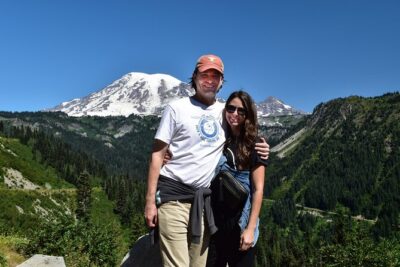

Best of Mount Rainier National Park from Seattle: All-Inclusive Small-Group Tour
Read our review →
Mt Rainier National Park Small Group Day Tour from Seattle 2CanGo
Read our review →
Mt. Rainier highlights – old forest, falls and glaciers
Read our review →
Browse the lists this tour appears in