
Reviewed · COOKING CLASSES
Japanese Sushi Cooking Class in Seattle (Includes 4-Course Meal)
Sushi lessons, served course by course. In Seattle through Cozymeal, I love the hands-on pace and the way you learn both sushi technique and a complete four-course lineup, spring rolls, a salmon avocado roll, noodles, and a matcha dessert. One thing to consider: this class runs out of a private home in Renton, so it feels more like cooking with locals than a sleek food hall.
You’ll get about 2 hours 30 minutes total, starting at 6:00 pm, and it stays small with a maximum of 19 people. You can also bring wine or beer to enjoy during the meal, which makes it a fun weeknight date night or family dinner plan.
If you have dietary needs, the organizers say they’ll do their best to tailor the experience when you let them know in advance. The class is offered in English, so you can focus on technique instead of translating what someone is saying.
In This Review
- Key Things I’d Plan Around
- Where You Cook: Renton Home Kitchen, Small Group, Real Food Vibes
- The Class Flow: Make a Four-Course Meal Without Feeling Rushed
- Starter Spring Rolls: Crunchy Prep and a Peanut Sauce You’ll Remember
- Sushi Rice and Rolling Basics: Precision, But With Feedback
- Salmon Avocado Sushi Roll with Wasabi Mayo: The Flavor Balance Lesson
- Pan-Fried Asian Garlic Noodles: A Comfort Main That Teaches Quick Heat Control
- Matcha Ice Cream Floats: A Cool Finish That Makes the Whole Meal Feel Complete
- Price and Value: Is $123 a Good Deal for a Seattle Sushi Class?
- Who This Cooking Class Fits Best in Seattle
- What to Bring, Timing Notes, and How to Make the Evening Go Smoothly
- FAQ
- FAQ
- How long is the sushi cooking class in Seattle?
- Where does the class meet?
- What time does the class start?
- Is this a small group?
- What dishes are included in the 4-course meal?
- Is the event BYOB?
- What language is the class taught in?
- Can dietary needs be accommodated?
- Are service animals allowed?
- What is the cancellation policy for a full refund?
- Should You Book This Sushi Cooking Class in Seattle?
Key Things I’d Plan Around
- A true four-course meal you make yourself, not just a single sushi lesson
- Hands-on instruction that balances guidance with room for your own style
- Salmon avocado sushi roll with wasabi mayo, plus spring rolls and noodles
- Matcha ice cream floats to finish, so the class feels like a full meal experience
- Small group size (max 19), which helps you get attention while you cook
- BYOB allowed (wine or beer), so you can match the mood to your food
Where You Cook: Renton Home Kitchen, Small Group, Real Food Vibes
This is a Japanese sushi cooking class in Seattle that meets in Renton, at 13225 SE 181st Pl, Renton, WA 98058. That matters for expectations. You are not going to a commercial cooking school kitchen with rows of identical stations. Instead, you’ll be cooking in a private home setting, which tends to feel warmer and more personal.
The upside is practical: home kitchens are where real cooking happens. You learn how to work around a real setup, share workspace, and keep moving so you can finish a full meal. The downside is that the environment is not designed like a restaurant back-of-house, so it can feel more snug and casual than you’d get at a bigger venue.
With a maximum of 19 participants, the format should stay friendly. You will likely have enough elbow room to make progress, but you should still expect to work at a group pace. In other words, don’t count on slow, perfectly controlled practice time for every step. You’re learning how to cook a meal, on schedule.
The Class Flow: Make a Four-Course Meal Without Feeling Rushed
The overall structure is simple and smart: you move from starter to sushi roll to a hot main, then a dessert finish. That sequencing helps your brain. You’re not switching between unrelated tasks for hours. Each course uses overlapping skills like prepping ingredients, managing timing, and tasting for balance.
The class is about 2 hours 30 minutes total, starting at 6:00 pm. So you can think of it as a full evening event. If you come hungry (you should), you’ll be rewarded with a complete meal at the end rather than a few bites.
One of the best values here is that you’re not only learning sushi technique. You’re also making spring rolls, pan-fried Asian garlic noodles, and matcha ice cream floats. That turns the class into a repeatable cooking base. You can take the general methods you learn and adapt them for other rolls, noodle variations, and desserts later.
A few other things to do around Seattle
- Authentic Italian Cooking Class in Seattle (5-Course Meal)
★ 5.0 · 7 reviews - Private Seattle Cooking Class with a Chef in Her Home
★ 5.0 · 6 reviews - Private Pike Place Market Tour and Cooking Class with a Local
★ 5.0 · 1 review
Starter Spring Rolls: Crunchy Prep and a Peanut Sauce You’ll Remember
The starter is spring rolls filled with julienned vegetables and served with a peanut dipping sauce. This course is more than something to eat first. It teaches structure.
Julienned vegetables are about consistency, not fancy knife work. When the pieces are similar size, they soften evenly in the roll and keep the texture pleasant. For you, that means the roll won’t end up with one part that’s too crunchy and another that’s too soft.
Then comes the peanut dipping sauce, which is your flavor anchor. Peanut sauces can go bland if they are not balanced, so this is a good moment to learn how sweet, salty, and nutty flavors work together. Even if you never make spring rolls again, the sauce concept is useful. You can reuse the idea for other dipping sauces or quick dressings.
If you’re cooking with family, this starter also works well because it’s approachable. Teens can handle the rolling rhythm. Adults can focus on the dipping sauce and tasting. Everyone can participate without feeling like they need advanced knife skills right away.
Sushi Rice and Rolling Basics: Precision, But With Feedback
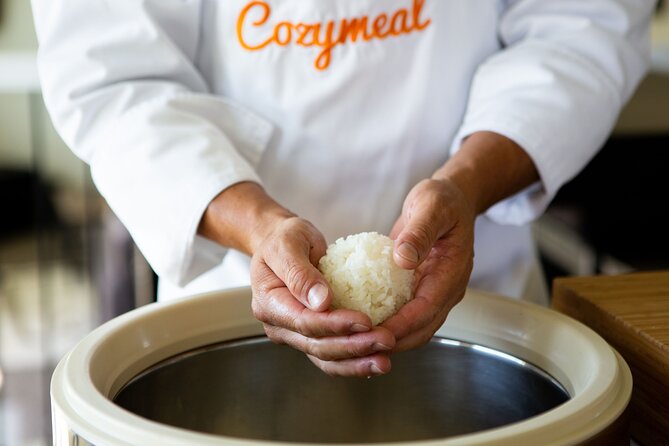
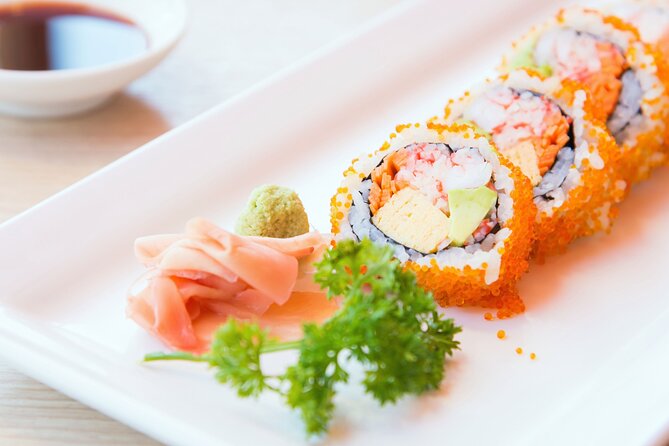
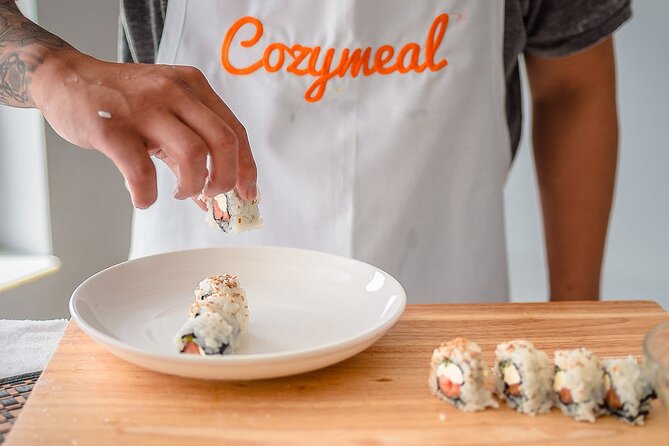
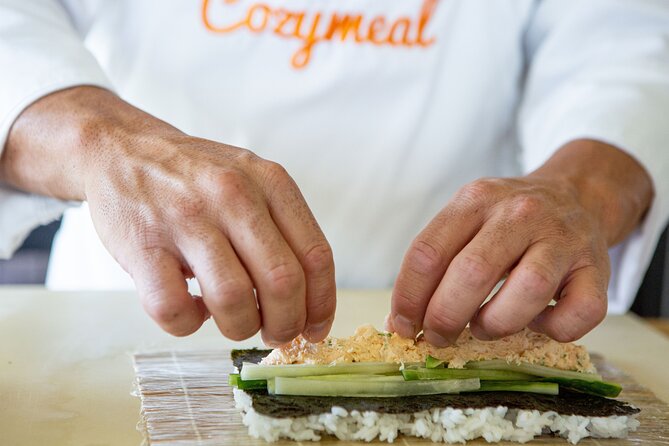
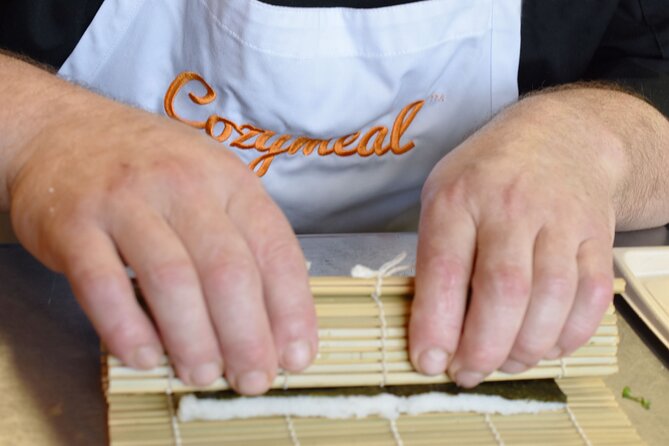
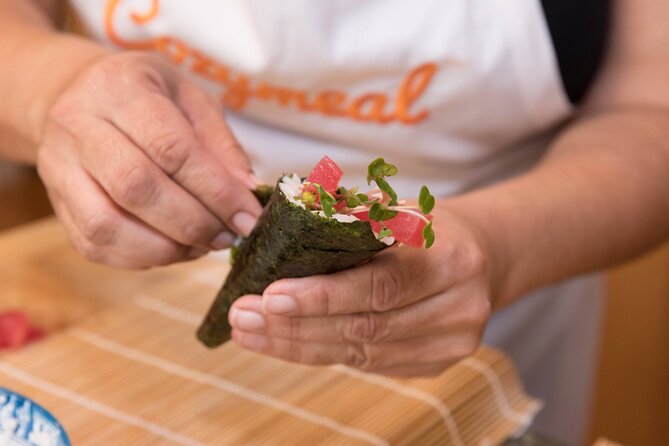
The sushi portion centers on a salmon avocado sushi roll with wasabi mayo. Sushi rolling gets treated like a mystical art, but in a cooking class setting, it’s mostly technique and repetition: portion size, how tightly you roll, and how you distribute ingredients.
This class aims for balance: you get instruction that helps you roll cleanly while still letting you make your own decisions. That matters because hands-on learning is only useful if it builds your confidence. If someone takes full control, you might leave with a nice meal but not much skill transfer.
Also, the class is designed as an inclusive experience. The format is friendly enough that you can learn even if you’re not a confident cook. And if someone in your group is vegan, there’s an explicit note that the chef will do their best to accommodate dietary needs when you arrange it in advance.
A quick practical takeaway for you: plan to eat what you make. Sushi is about balance. If your roll is too thick, it’s harder to slice and the texture can feel heavy. If it’s too thin, the flavors don’t hold together the same way. The goal is a roll that looks and tastes cohesive.
Salmon Avocado Sushi Roll with Wasabi Mayo: The Flavor Balance Lesson
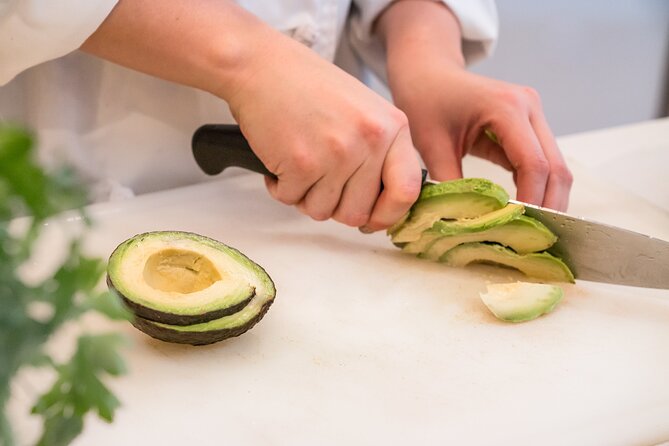
This course is built for flavor contrast. Salmon and avocado bring rich, fatty comfort. Sushi rice and nori give structure. Wasabi mayo adds heat and tang, but it’s typically less aggressive than straight wasabi, which makes it easier for more people to enjoy.
What I like about this specific combo is that it teaches versatility. Salmon avocado roll is familiar enough to feel approachable, but it’s still different from basic cucumber rolls. You learn how to integrate creamy and savory elements without letting one dominate.
When you’re rolling, keep your focus on three things:
- Portion control so the roll slices cleanly
- Even distribution so you don’t get a thick pocket of filling
- Tight enough roll to hold, not so tight that it squeezes out the filling
And for tasting, wasabi mayo is your calibration tool. If you find it too spicy, it’s okay to go lighter next time. If it’s not spicy enough, you can adjust the amount in future rolls. That’s the kind of learning that sticks.
Pan-Fried Asian Garlic Noodles: A Comfort Main That Teaches Quick Heat Control
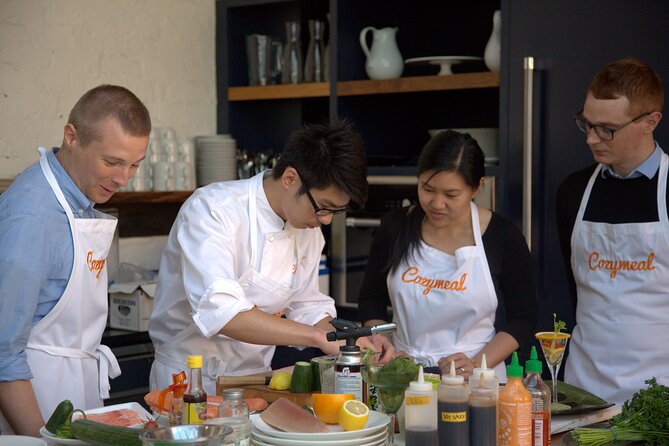
The main dish is pan-fried Asian garlic noodles with soy, sesame oil, oyster sauce, green onions, and chili flakes. This is a great pairing with sushi because it adds heat and savory depth that’s totally different in feel.
Unlike sushi, which relies on careful assembly, noodles teach you about cooking rhythm. Sesame oil and soy bring aroma and salt. Oyster sauce adds a deeper umami layer. Chili flakes let you dial in heat at your own comfort level.
For you, the value is learning how sauces behave when they hit heat. Sesame oil is fragrant, not just oily. Soy carries a salt base plus caramel notes if the pan gets hot enough. Chili flakes can mellow or intensify depending on how long they cook.
This course also helps you complete a full meal experience in about the same window as the sushi. The class keeps you moving, but you’re not just rushing food. You’re learning how to coordinate hot cooking while a meal is in progress.
Rain in the forecast or not, these run out of Seattle too:




Matcha Ice Cream Floats: A Cool Finish That Makes the Whole Meal Feel Complete
Dessert is matcha ice cream floats topped with whipped cream. This is an underrated part of the class because it turns the session into something you’d actually repeat for guests.
Matcha has a distinct flavor, earthy and slightly bitter. When it’s paired with sweet whipped cream and the familiar feel of ice cream, it becomes more approachable. That’s useful knowledge for you. If you’ve avoided matcha in the past because you thought it would taste too “green,” this is the kind of dessert format that makes it kinder.
The float style also teaches a simple serving lesson: keep the layers light and let the flavors mix without turning everything into one melted puddle. You end up with a dessert that feels fun, not fussy.
Price and Value: Is $123 a Good Deal for a Seattle Sushi Class?
At $123 per person for about 2 hours 30 minutes and a full four-course meal, the value depends on what you want out of your night.
Here’s why I think it can be a good use of money:
- You’re paying for instruction and hands-on time, not just eating.
- You get a complete meal you make yourself: spring rolls, sushi roll, noodles, and dessert.
- The group size stays small, which matters when you want feedback while you’re working.
It also helps that BYOB is allowed, meaning you can bring wine or beer and avoid adding a separate drink purchase cost. If you already drink casually, that’s a practical perk.
The potential catch is simple: if you only want to learn sushi, and you don’t care about spring rolls, noodles, or matcha dessert, then you might feel like the menu is more than you needed. But if you want a rounded Japanese-inspired cooking experience, the $123 is basically paying for a full meal teaching plan.
Who This Cooking Class Fits Best in Seattle
This Japanese sushi cooking class in Seattle is a strong fit for:
- Food-curious couples who want a date that’s interactive instead of just sitting and eating
- Families with mixed ages, because the menu has a range of tasks
- Beginner cooks who want structure and feedback without intimidation
- People with dietary needs, since the organizers say they’ll tailor where possible if you ask in advance
One of the most reassuring parts of the class format is that it doesn’t require you to cook perfectly. The goal is learning. You get guidance, but the class also leaves room for individuality, meaning your roll might look different from someone else’s and still be valid.
That’s especially important if you’re cooking with a group that includes both confident and not-so-confident cooks. The menu is varied enough that different people can enjoy different parts of the experience, and everyone still ends up eating what they made.
What to Bring, Timing Notes, and How to Make the Evening Go Smoothly
The class starts at 6:00 pm and ends back at the meeting point. The meeting address is 13225 SE 181st Pl, Renton, WA 98058. Because it ends where it starts, it’s easier to plan transport.
Since it’s BYOB, bring your preferred bottle or a couple of drinks if that’s your style. The organizers specify that guests are welcome to bring wine or beer to enjoy during the class. If you don’t plan to drink, you can still enjoy the food, but going empty-handed might feel anticlimactic if your group is in celebration mode.
You should also know the class is offered in English, and it uses a mobile ticket. So make sure you can access your ticket on your phone. Confirmation is received at booking, which is helpful if you want fewer last-minute questions.
Finally, if you have any dietary restrictions, tell them in advance. The organizers explicitly say they try to accommodate a variety of dietary needs. That’s the difference between a class that surprises you and a class that actually works for your group.
FAQ
FAQ
How long is the sushi cooking class in Seattle?
It runs for about 2 hours 30 minutes.
Where does the class meet?
It meets at 13225 SE 181st Pl, Renton, WA 98058, USA.
What time does the class start?
The start time is 6:00 pm.
Is this a small group?
Yes. The class has a maximum of 19 travelers.
What dishes are included in the 4-course meal?
You’ll make spring rolls with julienned vegetables and peanut dipping sauce, a salmon avocado sushi roll with wasabi mayo, pan-fried Asian garlic noodles with soy, sesame oil and chili flakes, and matcha ice cream floats topped with whipped cream.
Is the event BYOB?
Yes. Guests are welcome to bring wine or beer to enjoy during the class.
What language is the class taught in?
The class is offered in English.
Can dietary needs be accommodated?
The class is designed to accommodate a variety of dietary needs. You should let them know in advance so they can tailor the experience as best they can.
Are service animals allowed?
Service animals are allowed.
What is the cancellation policy for a full refund?
You can cancel up to 24 hours in advance for a full refund.
Should You Book This Sushi Cooking Class in Seattle?
If you want a Seattle-area evening that’s part cooking skill-building and part full meal experience, I’d say this is a solid pick. The value comes from the hands-on format plus the fact that you cook four different courses, not just one sushi roll.
Book it if you like interactive food, want to learn practical techniques you can repeat, and don’t mind that it’s in a private home setting in Renton. Skip it if you only care about sushi and would rather spend your time somewhere with a sushi-focused menu and less variety.
Written up lately around the Sound
- Seattle Customized Private Tour
- Enchanting Zipline , Camano Island and Deception Pass Tour
- Full Day Seattle’s W2 Tour – Wineries and Waterfalls
- From Seattle – Private Mt Baker and Cascades Tour in SUV★ 5.0 · 1 review
- Museum of Glass and Thea Foss Waterway Walking Tour★ 5.0 · 1 review
- Seattle: Longmire in Mount Rainier Winter Day Tour★ 5.0 · 1 review
- Woodinville’s Downtown Wine Tasting Pass★ 5.0 · 1 review
Cooking Classes, compared.
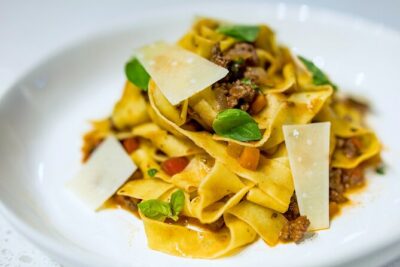
Authentic Italian Cooking Class in Seattle (5-Course Meal)
Read our review →
Private Seattle Cooking Class with a Chef in Her Home
Read our review →
Traditional Japanese Ramen Cooking Class in Seattle
Read our review →
Private Pike Place Market Tour and Cooking Class with a Local
Read our review →Browse the lists this tour appears in