

Reviewed · SCAVENGER HUNTS
Seattle Time Travel Exploration Game and Tour
In This Review
- A fun way to see Seattle on your terms
- Quick Takeaways Before You Start
- How This “Time Travel” Game Works in Real Life
- Price and Value: Why $7.20 Can Be a Steal or a Miss
- The Route From the Father and Son Fountain to the International Fountain
- Stop-by-Stop: What Each Area Feels Like in the Game
- 1) Father and Son Fountain: The First Clue Moment
- 2) Around the Pacific Science Center: A Logical Mid-Game Reset
- 3) Peace Garden at Seattle Center: Art and Calm Between Big Sights
- 4) Sonic Bloom: Where the Clues Push You to Look Twice
- 5) Space Needle Area: The Big Anchor Landmark
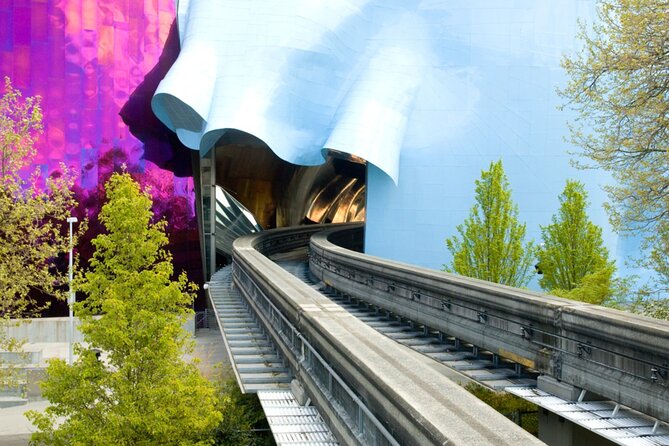
- 6) Museum of Pop Culture: A Modern Stop With Puzzle Energy
- 7) Bill and Melinda Gates Foundation: A Big-Name Contrast
- 8) Artist at Play Playground Center: End-Stage Energy
- 9) International Fountain Finish: Story and City Quest End
- The Hidden Value: What You Learn Without a Lecture
- Where Things Can Go Wrong (And How to Stay Calm)
- Who This Is Best For
- A Few Practical Timing Tips (So You Do Not Feel Rushed)
- Should You Book It? My Honest Recommendation
- FAQ
- How much does the Seattle Time Travel Exploration Game and Tour cost?
- How long does the experience take?
- Where does the tour start and end?
- Do I need a tour guide?
- What app do I use for the game?
- Is the experience available in English?
- Can kids participate, and is it free for them?
- Is there customer support if I get stuck?
- Is service available for people who need a service animal?
- Is free cancellation available?
A fun way to see Seattle on your terms
This time-travel style game turns major Seattle sights into a clue-based walk. You solve prompts on your phone and move from landmark to landmark, with no tour guide telling you where to go next. It also uses some genuinely interesting local waypoints, including the Space Needle area and Seattle Center art stops like Sonic Bloom.
What I like most is the freedom. You can pause, grab a snack, and keep going when you want, which is a big deal when your group walks at different speeds. I also like the low price point for an all-in city experience, and that kids are free.
One consideration: the whole thing depends on clear phone instructions and accurate routing. In at least one case, the directions were hard to follow, leading to major backtracking and a much longer day than expected.
Quick Takeaways Before You Start

- Self-paced city quest with phone clues, so you are not stuck on a fixed guide schedule
- Stops around Seattle Center and iconic landmarks, including Space Needle, Museum of Pop Culture, and Sonic Bloom
- Includes lesser-known art and sight details, like Seattle Cloud Cover (glass bridge and sculpture) and the Anne Frank chestnut tree
- Customer support is available 24/7, which matters when you hit confusing directions
- Duration can stretch if you spend extra time solving clues or get rerouted by real-world access changes
How This “Time Travel” Game Works in Real Life
This is not a guided tour in the usual sense. It is a city exploration game delivered through the Questo app. You start at a point near the Father and Son fountain and get your first clue. Each clue solves part of the story and gives you directions to the next area.
That design is exactly why this can feel great. Instead of “here is what you are looking at,” you get a reason to look closer. You are walking between places, but your brain stays busy with the next instruction, the next landmark, the next challenge.
The other big real-world benefit is flexibility. You do not have to keep pace with a group. Your app-based route expects you to take breaks and continue when you want. That is ideal if you want photos, want to sit, or need to slow down.
Just keep one expectation straight: you are paying for an experience structure, not for a guide’s deep explanations. If you want a lot of spoken context, you may find this lighter than you hoped. You may still enjoy the sights, but the “newness” comes more from the game than from fresh, narrated history.
More puzzle walks around downtown:
- Seattle Scavenger Hunt Adventure
★ 3.5 · 7 reviews - Awesome Scavenger Hunt: Seattle By The Sound
★ 3.5 · 3 reviews - Seattle Showdown Scavenger Hunt
★ 5.0 · 3 reviews
Price and Value: Why $7.20 Can Be a Steal or a Miss

At $7.20 per person for about 1 hour to 1 hour 30 minutes (estimated), the value can be excellent. You are getting:
- A phone-based quest through multiple Seattle landmarks
- A set of stops that cover both famous and smaller art-related points
- 24/7 support
- Free entry for kids (so families can keep costs down)
But there is a catch. The experience is only worth it if the clue format works for you. If you have trouble reading instructions on a phone, or if your routing hits messy access points, you can lose time fast. In one unhappy case, the route became confusing, required customer support help, and ended up taking over 4 hours.
So here is the balanced take: this is good value when you are comfortable navigating on your own, and when you are willing to troubleshoot lightly if the phone directions get weird. If you want a smooth, guided experience with zero friction, you might prefer a traditional tour.
The Route From the Father and Son Fountain to the International Fountain
Your journey starts at the Father and Son fountain near the Elliott Bay Trail area in Seattle (the provided meeting info points along Elliott Bay Trail). You finish at the International Fountain at 305 Harrison St, Seattle, WA 98109.
The end point matters because you can plan your day around it. International Fountain is a central, recognizable “wrap-up” location. If you are pairing this with other Seattle Center plans, you will likely find it easier to transition afterward.
The app also runs with long daily access hours listed as 12:00 AM to 11:30 PM (based on the provided opening-hours window), so you are not forced into a narrow time slot.
Stop-by-Stop: What Each Area Feels Like in the Game

Below is what you should expect as the game moves through each landmark area. The details are guided by the official stop list and the style of clue-based walking, not by a live guide talking the whole time.
1) Father and Son Fountain: The First Clue Moment
You begin at the Father and Son fountain, and you will get your first clue right away. This is your “orientation” stop. It sets the tone: you solve the prompt, then the game tells you where to go next.
Practical tip: before you start walking, confirm your app is loaded and your phone brightness is high enough to read instructions outdoors. The early part is where you want your settings to be right.
A few other things to do around Seattle




2) Around the Pacific Science Center: A Logical Mid-Game Reset
Next, you get a clue around the Pacific Science Center area. Since the game is self-paced, this is a good moment to slow down, take a breath, and reset. You can spend more or less time depending on how quickly you solve.
This stop tends to work well if you like active wandering. Even without a guide, the area gives you multiple things to look at and scan for clues.
Downside to keep in mind: if you arrive at entrances or viewing points that require ticketing or gate access, the game instructions might route you toward restricted areas. In one documented issue, the route got close to a ticketing situation that would have cost each person to proceed, until customer support helped bypass the problem. So keep support contact handy.
3) Peace Garden at Seattle Center: Art and Calm Between Big Sights
You then move toward the Peace Garden at Seattle Center. This is a nice contrast in the flow of the route. When the game is asking you to focus on clues, calmer spaces can make the puzzle feel more pleasant.
This is also where you may start noticing Seattle Center art and details that most people skip when they move straight from one big landmark to another.
4) Sonic Bloom: Where the Clues Push You to Look Twice
The next clue focuses around Sonic Bloom. A stop like this is exactly why the game format can be fun. Instead of just passing by a sculpture, you are required to connect what you see to the next instruction.
If you like photo stops and public art, you will likely enjoy this segment. If you are not into sculptures or visual puzzles, you might treat it as a quick waypoint and move on.
5) Space Needle Area: The Big Anchor Landmark
The game then brings you to the Space Needle area. This is the most “obvious Seattle” part of the route, and it anchors the game in a recognizable landmark you can point to easily.
Even if you have seen the Space Needle before, clue-based routing can still make the walk feel different. You may also spot some of the lesser-known items the overview calls out, like Seattle Cloud Cover (glass bridge and sculpture), depending on how the game routes you through the area.
Just be aware: if you are expecting “all-new” Seattle surprises, this segment is still Seattle Center core. The sights are famous for a reason, but the game does not magically remove the fact that you are walking through public landmark zones.
6) Museum of Pop Culture: A Modern Stop With Puzzle Energy
Next you get a clue around the Museum of Pop Culture. Since this is a well-known Seattle Center institution, it can make the game feel more grounded in the actual city.
This is another good break point. You can spend time reading your screen, solving, and deciding whether to keep walking right away or stretch your legs.
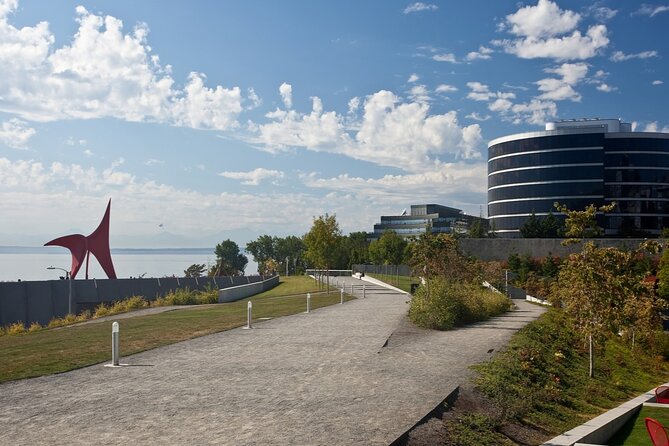
7) Bill and Melinda Gates Foundation: A Big-Name Contrast
The following stop area is the Bill and Melinda Gates Foundation. This shift can make the walk feel more like a city survey than a theme-park route. Seattle has a “tech meets civic life” vibe, and this stop reflects that.
In a clue-based format, it also means you will be paying attention to details around a more institutional area, not just scenic plazas.
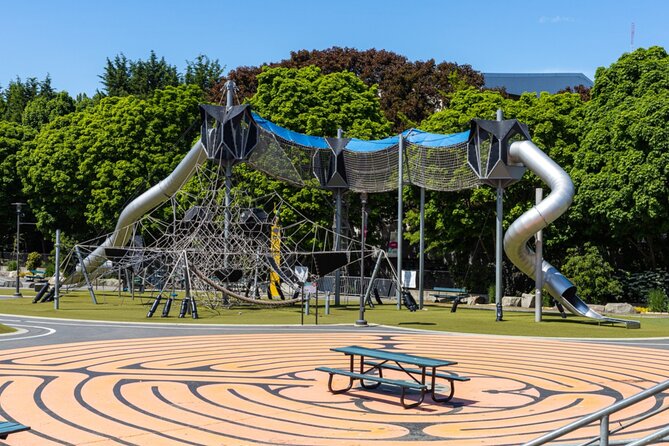
8) Artist at Play Playground Center: End-Stage Energy
Then you move toward the Artist at Play Playground Center. This is a clever ending-stage stop because playground spaces can be fun for families, and they give you a change of pace from pure landmark sightseeing.
If you are traveling with kids, this segment is likely to keep attention longer, especially since the overall experience is listed as free for kids.
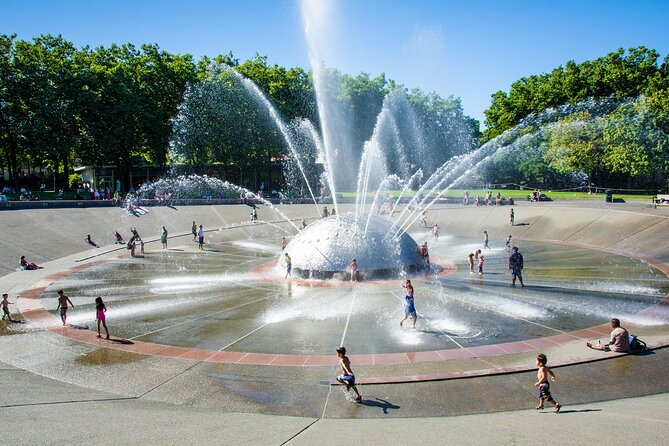
9) International Fountain Finish: Story and City Quest End
You finish around the International Fountain. This is the stop where the story and the city exploration game ends.
If you are trying to plan the rest of your day, treat this like your “capstone location.” From here, you can easily pivot to other Seattle Center options or head back toward transit.
The Hidden Value: What You Learn Without a Lecture
The overview says the game teaches you about innovators and thought pioneers that shaped Seattle. In a phone-puzzle format, this kind of learning is more about prompts and noticing details than sitting still for facts.
You also get the benefit of “walking between them.” Seattle Center and the surrounding core landmarks are close enough that you can see how the city places art, science, tech, and public space in the same zone.
And because the game can include unique named waypoints like the Anne Frank chestnut tree, you may end up noticing parts of Seattle you would not necessarily target on a normal sightseeing list.
Where Things Can Go Wrong (And How to Stay Calm)
The most important practical warning is not about safety. It is about clarity and routing.
One negative experience highlighted multiple problems:
- The trip instructions were unclear and difficult to locate on the app
- The routing led to outdated info and possible gate or ticket booth issues
- There was significant backtracking due to unclear direction changes
- The estimated 60 to 90 minutes ballooned into over 4 hours
That same account also praised customer service as prompt and helpful. So if the app is confusing you, you are not stuck alone.
My advice to you:
- Give yourself extra time if you can, especially on your first try
- Make sure you can access the instructions in the app before you start walking
- If you hit a dead end or gate, contact support early instead of guessing your way through it
If you are the type who gets frustrated when directions are vague, this might not be your best match. If you enjoy problem-solving and you do not mind adapting, you will probably find the experience more forgiving.
Who This Is Best For
This game is a good fit if you:
- Like self-directed walking and phone-based challenges
- Want a budget-friendly way to cover multiple Seattle Center landmarks in one sweep
- Travel as a group where different people walk at different speeds
- Enjoy public art and prefer learning by noticing rather than listening
It is also listed as private, meaning only your group participates. That can reduce the “herding” feeling you sometimes get with fixed tours.
It is also stated as English language offered and that most travelers can participate. Service animals are allowed and it is near public transportation, which helps if you do not want to rely entirely on rideshare.
A Few Practical Timing Tips (So You Do Not Feel Rushed)
Since the stated duration is about 1 to 1.5 hours but real conditions can vary, plan for flexibility.
If you are aiming for a quick hit before dinner, I would still build in a cushion. A clue-based route can stretch because of:
- solving time
- reading and re-reading instructions
- access changes around attractions
- occasional need for help
Think of it as a light outing, not a strict stopwatch activity.
Should You Book It? My Honest Recommendation
I would book this if you want a low-cost way to see Seattle Center and nearby big names without paying for a traditional guided tour. The price, the self-paced freedom, and the phone puzzle structure are the core wins.
Skip it if you need step-by-step clarity and you get stressed by confusing instructions. One real issue involved a loop of unclear instructions, outdated routing, and a much longer end-to-end time.
If you do book it, go in with the right mindset. You are buying a game, not a lecture. When the phone cues are working, this can feel like a smart way to turn sightseeing into a quest. When they are not, having 24/7 support is your safety net.
FAQ
How much does the Seattle Time Travel Exploration Game and Tour cost?
It costs $7.20 per person.
How long does the experience take?
The duration is listed as about 1 hour to 1 hour 30 minutes.
Where does the tour start and end?
It starts at the Father and Son fountain and finishes around the International Fountain at 305 Harrison St, Seattle, WA 98109.
Do I need a tour guide?
No. This is a self-guided city exploration game, and it does not include a tour guide.
What app do I use for the game?
You use the Questo app on your phone.
Is the experience available in English?
Yes, it is offered in English.
Can kids participate, and is it free for them?
Kids are listed as free.
Is there customer support if I get stuck?
Yes. The experience includes 24/7 customer support.
Is service available for people who need a service animal?
Yes. Service animals are allowed.
Is free cancellation available?
Yes. You can cancel up to 24 hours in advance for a full refund.
Written up lately around the Sound
- Seattle Customized Private Tour
- Enchanting Zipline , Camano Island and Deception Pass Tour
- Full Day Seattle’s W2 Tour – Wineries and Waterfalls
- From Seattle – Private Mt Baker and Cascades Tour in SUV★ 5.0 · 1 review
- Museum of Glass and Thea Foss Waterway Walking Tour★ 5.0 · 1 review
- Seattle: Longmire in Mount Rainier Winter Day Tour★ 5.0 · 1 review
- Woodinville’s Downtown Wine Tasting Pass★ 5.0 · 1 review
Scavenger Hunts, compared.

Self-Guided Seattle Scavenger Hunt: Plunging Seattle’s Depths
Read our review →
Awesome Scavenger Hunt: Beautiful Views of Bellevue
Read our review →
Bellevue City Scavenger Hunt Excursion by Operation City Quest
Read our review →
Adventurous Scavenger Hunt in Seattle by Operation City Quest
Read our review →
Browse the lists this tour appears in