
Reviewed · HISTORICAL TOURS
Seattle Downtown Quest: Self-Guided History Adventure
Seattle downtown has a way of feeling quick. This self-guided history quest turns a simple walk into a puzzle game with 10 interactive challenges, so you learn by looking around instead of staring at plaques. I like that you set your own pace, with no guide hovering and no map or GPS needed. I also like the storytelling spread out across major stops, including Pioneer Square, Pike Place Market, and the Seattle Art Museum area. One catch to plan for, based on real feedback, is that a few on-site clue props can be missing due to construction or temporary refurbishments.
You start at Union Station and finish at Waterfront Park, which is a nice way to link big landmarks without committing to a long formal tour. The price is low for what you get, but it is also the kind of experience where phone access and following the in-app steps matter. If you want an easy afternoon with minimal tech fuss, you’ll still enjoy it, but only if your phone and app behave.
In This Review
- Key things to know before you start
- A phone-led walk from Union Station to Waterfront Park
- How the puzzle game teaches Seattle (without a guide)
- Stop by stop: from Klondike Gold Rush clues to Pioneer Square streets
- Smith Tower and the federal building: big city stories at street level
- Seattle Art Museum roots, Pike Place culture, and the park at the edge
- Beneath the streets: city birth, Coast Salish, and 1890s architecture
- Price and time: is it worth $7.20?
- Tech tips and on-site realities that can affect your game
- Who this is for, and who should skip it
- Should you book Seattle Downtown Quest?
Key things to know before you start
- Union Station to Waterfront Park, with downtown Seattle history threaded through each step
- 10 puzzle challenges that ask you to look around on site and answer on your phone
- No map or GPS needed, so you spend your time reading streets, not scrolling screens
- Major landmarks on the route, including Pioneer Square, Smith Tower, and Pike Place Market
- Flexible timing, since you can pause and resume anytime during your quest window
A phone-led walk from Union Station to Waterfront Park
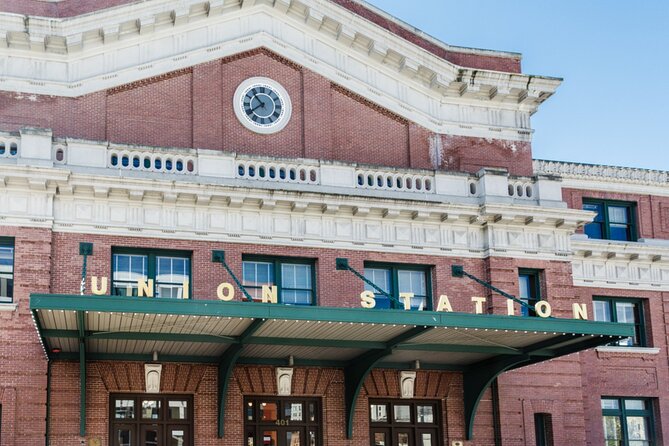
This quest is built for a simple goal, learn downtown Seattle history by doing little on-the-ground tasks. You begin at Union Station (401 S Jackson St) and end at Waterfront Park (1401 Alaskan Wy), which makes the whole thing feel like a directed stroll instead of a “go here, then maybe there.”
The format is straightforward. You get a mobile access code, then you work through the challenge stops at your own pace. It is offered in English, and it is designed so no physical guide is needed and no maps or GPS are required.
For me, the best part of this setup is control. You can slow down at the places you care about, and you can move faster when you just want to keep the momentum going. At 90 minutes on average, it is a good match for jet lag days, conference days, or any time you want a structured plan without locking yourself into a rigid schedule.
How the puzzle game teaches Seattle (without a guide)
The core idea is that each stop has a challenge tied to a story. You look around to find what you need, then answer through the app to move on to the next location. That “look for the answer in the real world” approach is why this works better than a pure audio tour.
You get 10 interactive puzzle challenges, and the experience includes storyline content about key events and places. Because it is self-guided, you can do it as a calm walk, or you can treat it like a friendly scavenger hunt. If you like problem solving, the structure gives your brain something to do while your eyes catch the architecture and landmark details.
One thing to keep in mind. This is not a sit-down museum-style presentation. It is street-level learning. That means weather and foot comfort matter. Also, if one particular on-site element is off-limits during construction, you may need to rely on hints or take a moment to interpret the clue.
I also like the “pause and resume anytime” flexibility. If your group needs a bathroom break or you want a quick coffee stop, you do not have to restart the whole thing.
A few other things to do around Seattle
- Beneath The Streets Underground History Tour
★ 4.5 · 8,006 reviews - Henry Art Tours-Come See the Fun Side of Seattle Art/Pubs/History
★ 5.0 · 27 reviews - Six Women: A Seattle History Tour
★ 5.0 · 20 reviews
Stop by stop: from Klondike Gold Rush clues to Pioneer Square streets
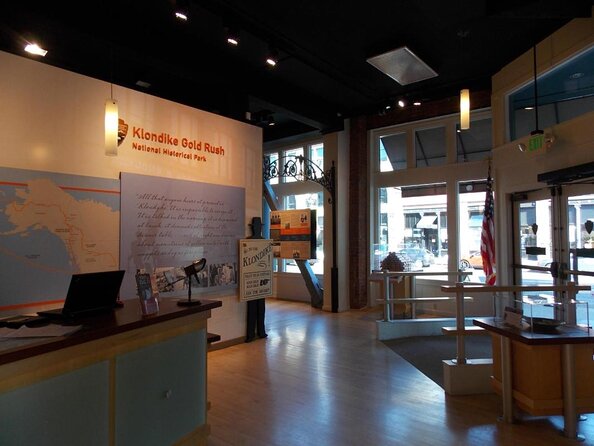
The route starts by pulling you toward Klondike Gold Rush National Historical Park. This is where the quest begins to mix visible details with history. You are prompted to look around to find the answer to the challenge, and along the way you learn what to notice.
One of the most specific details you get here is about the park’s totem poles and woodcarvings. They were created by Duane Pasco in the 1970s and donated by gallery owner Richard White, then installed in the 1980s. You learn stories tied to individual carvings, including:
- The tallest totem, Sun and Raven, which tells the story of Raven’s theft of the moon. It was created for the 1974 Spokane World’s Fair.
- Man Riding on Tail of Whale, carved in 1971.
- Tsonoqua, a mythological giantess, described as a nightmare-bringer invoked by North Coast mothers to get children to obey.
Even if you do not know any of this already, the format nudges you to connect characters and dates to what you see. And because the game asks for answers on site, you are paying attention to carvings instead of rushing past them.
Next you move into the Pioneer Square area. This is where you get a sense of Seattle’s older core. The description emphasizes late-1800s Romanesque Revival buildings, plus the neighborhood feel with art galleries, coffee shops, and trendy bars. You also get context for the Underground Tour, with a reminder that visitors explore subterranean streets to trace the city’s roots tied to the Klondike Gold Rush era.
Practical note: Pioneer Square has a lot going on. If you get stuck on a clue, you can still use the lively street environment to reset and try again. The upside is that you are never far from a place to check your bearings on your phone or grab a quick drink while you work out the next step.
Smith Tower and the federal building: big city stories at street level
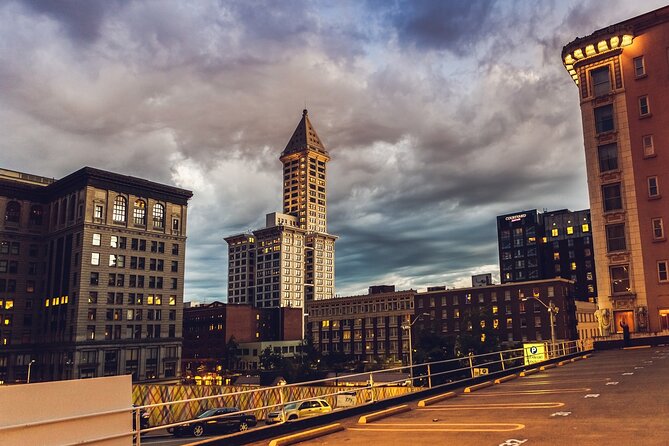
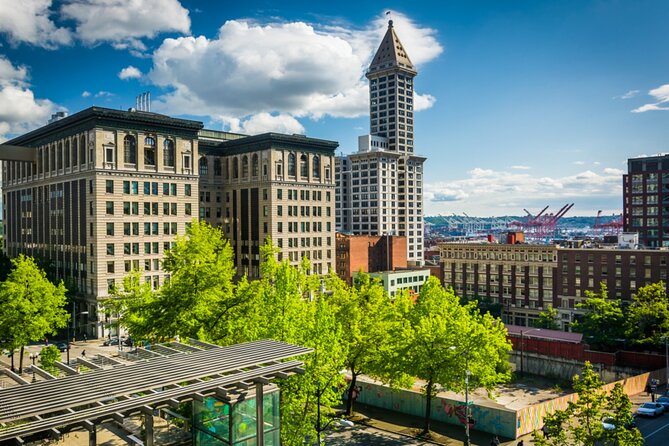
As you keep moving, the quest leads you to Smith Tower. This isn’t just a name on a skyline. The details matter. Smith Tower was completed in 1914, rises 38 stories and is 484 feet tall, and it is described as the oldest skyscraper in Seattle. At the time it was completed, it was among the tallest skyscrapers outside New York City.
This stop is a great example of how the quest can make you notice scale. Instead of treating tall buildings as background, you are using the landmark as part of the puzzle route. If you like architecture and city growth stories, this is a satisfying moment, even though the quest itself is still an interactive walk.
After that comes the Seattle Federal Office Building (FOB), constructed in 1933. It is described as the first Seattle building designed specifically for offices of the federal government. The designer of record was James A. Wetmore, and early tenants included 52 federal agencies, with the largest being the Department of the Treasury.
This is one of those stops where you learn how downtown shape and government power used to concentrate in specific blocks. And again, the “look around” approach helps you treat the building like a living clue, not just a photo opportunity.
Seattle Art Museum roots, Pike Place culture, and the park at the edge
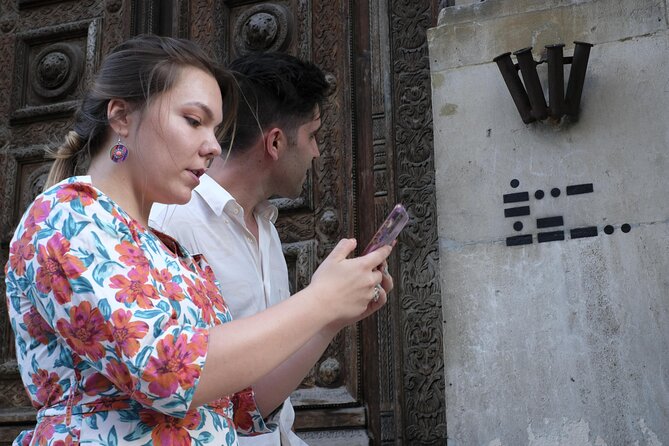
The quest then touches the area of the Seattle Art Museum (SAM). The storyline traces SAM’s origins to the Seattle Fine Arts Society (organized 1905) and the Washington Arts Association (organized 1906). Those merged in 1917, and the Fine Arts Society name was kept. In 1931, the merged group renamed itself as the Art Institute of Seattle.
You also get the key location that housed the collection at the start, the Henry House on Capitol Hill. That was the former home of founder and collector Horace C. Henry (1844 to 1928). It is an excellent kind of detail for a puzzle quest because it gives you names, dates, and a sense of how institutions evolve.
Then you head to Pike Place Market, described as a neighborhood in its own right, with hundreds of farmers, craftspeople, small businesses, and residents. You also learn what makes it more than just a tourist magnet. The market preserves historic buildings and supports artisans and small businesses, and it was chartered by the City of Seattle to provide services for low-income individuals.
If you care about local community structure, this part is the most grounded. The quest style nudges you to remember that markets are economic engines and community institutions, not just “one street of shops.”
At the north end of Pike Place Market is Victor Steinbrueck Park. The description focuses on the park’s summer afternoon vibe, with neighborhood residents, visitors, tourists, and office workers using the lawns, benches, and tables. It’s a nice breather in the middle of an active walking route.
Beneath the streets: city birth, Coast Salish, and 1890s architecture
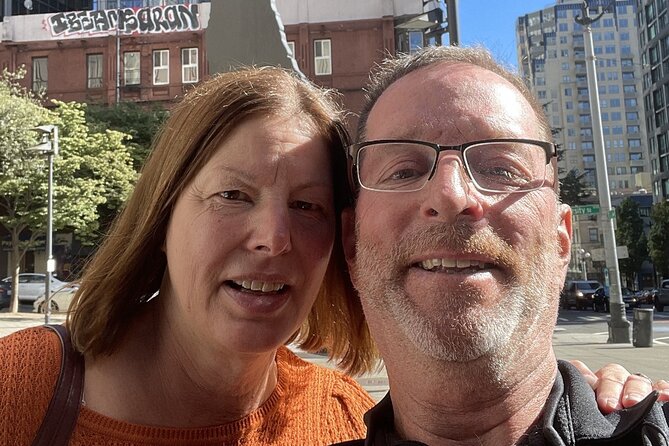
Your final stretch includes the Beneath the Streets theme, described as focusing on factual historical information. The storyline highlights Seattle’s birth in the 1890s, 1890s architecture, plus stories including the Klondike Gold Rush, Skid Row, and the Coast Salish Peoples who first inhabited the area.
I like this ending because it doesn’t just stay on famous landmarks. It brings you back to the idea that Seattle’s downtown grew through layered communities and major economic swings. And since your route started at Union Station and is ending at Waterfront Park, the structure makes the city feel like one continuous scene rather than scattered highlights.
This segment is also a good reminder for you as you play. If you reach a point where the puzzle seems confusing, slow down and reread what the app is asking. The questions are usually tied to a specific visual clue or a specific detail from the nearby story.
Rain in the forecast or not, these run out of Seattle too:




Price and time: is it worth $7.20?
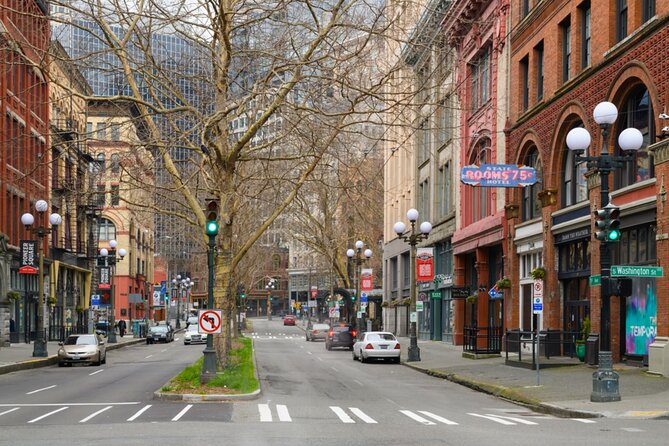
At $7.20 per person for about 1 hour 30 minutes, this quest is priced like a low-cost activity that can replace a casual museum stop or a long coffee detour. The value comes from two things:
First, you get 10 interactive challenges, not just passive narration. Second, you hit several top downtown anchor spots in one loop, including Klondike Gold Rush National Historical Park, Pioneer Square, Smith Tower, Seattle Art Museum, and Pike Place Market.
That said, there is a trade. This is cheap enough that you should treat it as a fun game with learning attached, not a guarantee of perfect clue placement. The most negative feedback you’ll see is usually about missing items due to construction, temporary changes at sites, or app access trouble that blocks progress.
To me, the sweet spot is clear. If you enjoy walking and you like figuring things out on your phone, this offers strong value for the time. If you need a fully dependable, step-by-step tour with everything present and working, a classic guided tour may feel less risky.
Also note the overall rating in the available feedback, 3.8 out of 5 across 26 reviews. That’s not awful, but it does suggest you should go in with realistic expectations.
Tech tips and on-site realities that can affect your game
A self-guided puzzle tour can go smoothly or feel frustrating, mostly based on two factors: app access and on-site clue placement.
From feedback patterns, here are the practical things that matter:
- Missing or moved puzzle elements happen. Some stops have had clue items absent due to construction, and at least one waypoint involving totems was temporarily unavailable because of refurbishment. If you hit that, use hints and focus on what you can still see nearby.
- Check your phone setup before you start. There are reports of users having trouble accessing or unlocking the game if app steps are not completed correctly. Do not assume “purchase equals instant play.” Follow the in-app instructions carefully.
- Expect a small hit to speed if you get stuck. Even when puzzles are fair, it takes time to find and interpret street-level clues. If you only have a short window, build in a buffer.
If you want this to feel like a win, go in with comfy shoes and a charged phone. This is also a good task for a small group. One device can work, and the shared problem solving tends to keep the energy up.
Who this is for, and who should skip it
This quest is a smart fit for you if:
- you like self-paced exploring
- you want quick structure without a formal guide
- you enjoy history through street details, names, and dates
- you are comfortable using your phone for interactive content
It may not be ideal if:
- you hate tech steps or unreliable app behavior
- you need every clue location to be perfectly prepared
- you want a purely interpretive experience with no need to look for answers
The private-group setup is also worth noting. It is described as a private activity where only your group participates. That is great for families and friend groups who want to keep it their own.
Should you book Seattle Downtown Quest?
I think you should book it if you want a low-cost, high-variety downtown activity that mixes Seattle Art Museum roots, Pike Place Market community details, and landmark-scale stories like Smith Tower. The $7.20 price and 90-minute timing make it easy to try, and the included puzzle format gives you a reason to slow down and actually notice what you’re walking past.
I would only hesitate if you are planning around tight timing or you know you will struggle with app access. In that case, bring a backup plan, like keeping your next stop flexible, or consider a guided option that does not rely on you finding puzzle props.
If your goal is a fun walk with built-in curiosity, this is a solid Seattle afternoon choice.
Written up lately around the Sound
- Seattle Customized Private Tour
- Enchanting Zipline , Camano Island and Deception Pass Tour
- Full Day Seattle’s W2 Tour – Wineries and Waterfalls
- From Seattle – Private Mt Baker and Cascades Tour in SUV★ 5.0 · 1 review
- Museum of Glass and Thea Foss Waterway Walking Tour★ 5.0 · 1 review
- Seattle: Longmire in Mount Rainier Winter Day Tour★ 5.0 · 1 review
- Woodinville’s Downtown Wine Tasting Pass★ 5.0 · 1 review
Historical Tours, compared.
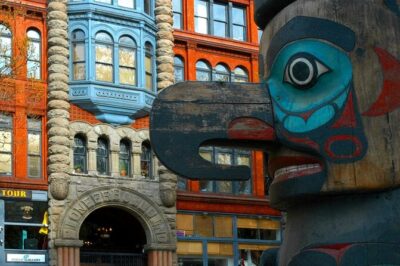
Beneath The Streets Underground History Tour
Read our review →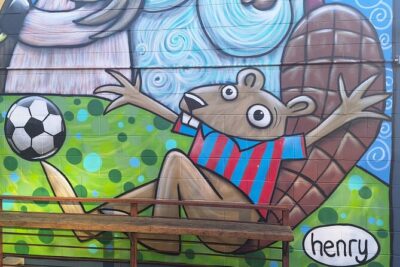
Henry Art Tours-Come See the Fun Side of Seattle Art/Pubs/History
Read our review →

Bite-Sized Seattle History & Food by Go West Tours
Read our review →
Full-Day Small-Group Bainbridge Island Wine and History Tour
Read our review →
Browse the lists this tour appears in