Reviewed · TOURS
Seattle Waterfront Electric Scooter Tour with Great Wheel
Seattle waterfront makes a lot more sense at scooter speed. This 1 hour ride uses an easy electric scooter plus a wireless headset so you can actually hear the stories while you glide past piers, ferries, and pop culture landmarks. I like that the route mixes old working-waterfront sites with modern Seattle stops, and I especially like how the guide style turns sightseeing into a simple, fun game.
Two standout perks for me are the small group size (max 6) and the guide energy. On one recent run, guide Sean John was patient, funny, and full of momentum, and that matters because the scooters can feel a bit different from typical street scooters. The main drawback to consider is that some of the most famous stops are quick photo and look-bys, so if you want long, in-depth time in each place, this tour may feel a bit fast.
In This Review
- Key highlights before you go
- Entering the ride: Miner’s Landing to the Great Wheel and Pier 59
- How the headset storytelling works while you scooter past Seattle’s landmarks
- Bell Harbor, tall ships, and the Beatles at the Edgewater Hotel
- Elliott Bay public art and the long stretch of Myrtle Edwards Park
- The 1909 cast-iron pergola, the UPS waterfall, and Pioneer Square viewpoints
- Habitat Beach, Colman Dock ferries, and the working-waterfront stops at Pier 55 and Pier 54
- Price and value: why $49 feels fair for a one-hour scooter tour
- Who this scooter tour suits best, and who should consider something else
- Should you book the Seattle Waterfront Electric Scooter Tour with Great Wheel?
- FAQ
- How long is the Seattle Waterfront Electric Scooter Tour?
- Where does the tour start?
- Is the Seattle Great Wheel included in the tour price?
- Is the Seattle Aquarium Ocean Pavilion included?
- How many people are in each tour?
- Does Pier 54 include admission?
- What is the cancellation policy?
Key highlights before you go

- Wireless headset guidance keeps you oriented while you ride past major waterfront sights.
- Max 6 people means you get more personal attention and easier traffic flow on busy docks.
- Optional Great Wheel time lets you add an attraction ticket only if you want it.
- A route packed with variety from tall ships and ferry terminals to public art and Pioneer Square.
- Practical, fun stops including classic Seattle oddities and a legendary clam spot.
Entering the ride: Miner’s Landing to the Great Wheel and Pier 59
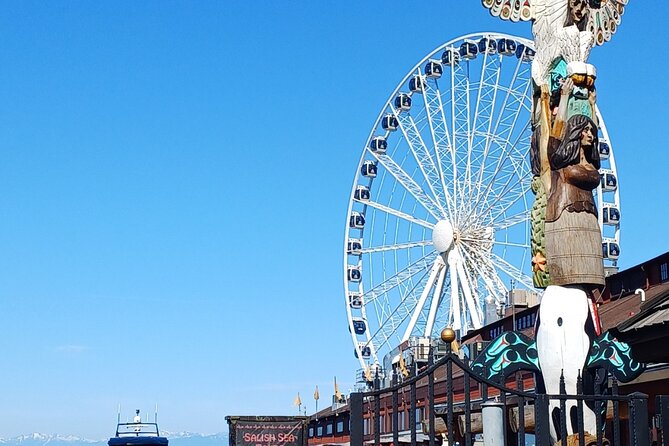
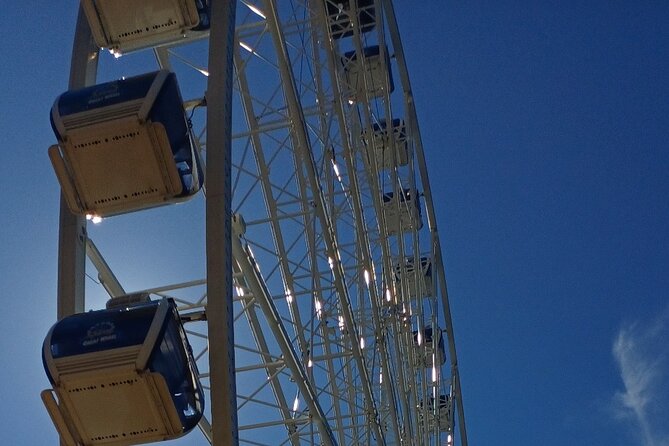
The tour kicks off at Miner’s Landing Pier 57, right by the Seattle Great Wheel. This is a smart starting point because it sits at the center of the waterfront, so you can orient yourself fast and then head north with confidence. You begin on an easy-to-ride electric scooter, which is a big part of why this feels like a breeze even though the waterfront can get crowded on foot.
The first stop is built around a classic waterfront mix: Pier 57 includes Miner’s Landing, the Great Wheel area, Wings Over Washington, arcades, crab-pot style details, and nearby local kitchen and bakery options. You get about 30 minutes here, and the Great Wheel is optional. Admission for the wheel is not included, so treat that as your choose-your-own-adventure moment. If you do it, plan your time so you do not feel rushed coming back to the group.
From there, you head toward Pier 59 for the Seattle Aquarium Ocean Pavilion. This is one of those places you can see clearly from the waterfront path, and the Ocean Pavilion is an expansion with immersive exhibits and a huge habitat featuring the Coral Triangle. Even if you only peek from outside, it helps to know you are biking right past a major family-friendly anchor on the waterfront. If you want to enter, you will likely need to manage your own admission since the tour does not say aquarium admission is included.
How the headset storytelling works while you scooter past Seattle’s landmarks
What makes this tour more than a simple ride is how the guide narration is delivered through a wireless headset. That means you can keep both eyes forward and still catch the details about what you are seeing. It is also how the guide can point out spots with quick context, like why a particular pier matters or what an old waterfront building was built to do.
The small group size also helps. With a maximum of 6 people, the guide can slow down when someone needs a hand adjusting their pace. In at least one experience with this company, the guide Sean John was praised for being patient, knowledgeable in a storytelling way, and funny, which makes a short, fast-paced ride feel lighter. And yes, there is a real practical note here: the scooters can be smaller than what you might expect if you have only ridden street models. That does not make them hard, but it is worth mentally preparing for the feel of a compact scooter before you launch into crowded pier space.
Shortlisting? Set this against a few other Seattle options:
- Beneath The Streets Underground History Tour
★ 4.5 · 8,006 reviews - Chef Guided Food Tour of Pike Place Market
★ 5.0 · 3,733 reviews - Mt. Rainier National Park Highlights Tour
★ 5.0 · 3,156 reviews
Bell Harbor, tall ships, and the Beatles at the Edgewater Hotel
As you continue along the downtown waterfront, Bell Harbor Marina becomes a key visual marker. This area is busy because it is a marina, with yachts and seasonal tall ships appearing depending on timing. The tour specifically calls out Seattle’s tall ships experience, so you can expect the guide to frame what you are looking at as part of the working harbor story.
Then comes one of Seattle’s best-known waterfront photo stops: the Edgewater Hotel. The Edgewater is built out on a pier, and that physical fact changes how it feels from street-level. The tour also points out the Beatles connection: in 1964, they stayed here during their first U.S. tour, famously fishing from their harbor-facing location. If you like pop history and travel myths that are grounded in a specific address, you will enjoy this stop because it is not abstract.
After the Beatles moment, you roll into a pop culture beat on Pier 70. The tour highlights Pier 70 as the old warehouse-turned-loft that hosted MTV’s The Real World: Seattle in 1998. This is one of those stops where the guide can tie architecture and location to the way Seattle has been marketed and remembered on TV.
Elliott Bay public art and the long stretch of Myrtle Edwards Park
The route keeps moving north, and this is where the waterfront starts to feel like a stitched-together walkway of parks, art, and harbor views. One planned stop is a free outdoor art park covering about 9 acres, with famous sculptures including Eagle by Alexander Calder and Wake by Richard Serra. If you are the type who likes seeing public art in context, this is a strong moment because you are not just looking at art in a museum, you are watching it sit beside boats, rails, and the ocean line.
Next comes Myrtle Edwards Park, and the ride here is especially pleasant. You get about a smooth 1.25-mile waterfront path framed by Elliott Bay on one side and the BNSF rail line on the other. That contrast is part of what makes it memorable. You have water views and open lawns, and you also get the working-city reality of rail lines running nearby. The tour is careful to guide you through this section as a treat, so it is not rushed by too many stops in a row.
After the park stretch, you reach Pier 91, the Smith Cove Cruise Terminal area. This is a different energy than the calmer lawn sections because cruise operations and dock activity change the background noise. The tour describes a dramatic stage-like waterfront setting and mentions colorful murals tied to Seattle’s fishing heritage. Even if you are not cruising, it helps to see the waterfront as a working stage, not just a scenic postcard.
The 1909 cast-iron pergola, the UPS waterfall, and Pioneer Square viewpoints
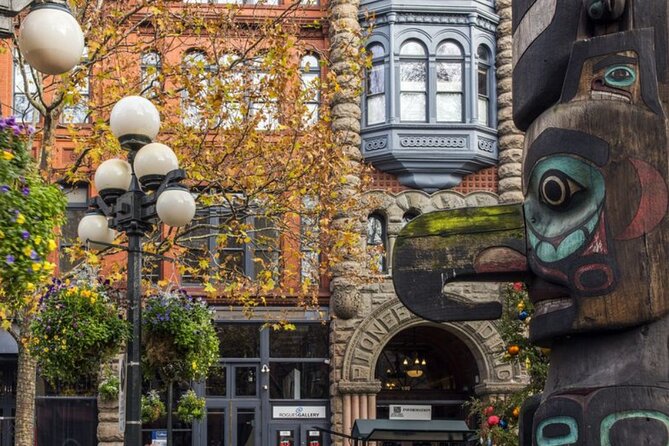
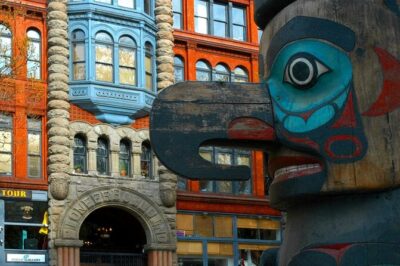
A well-timed photo stop happens at a cast-iron pergola built in 1909. The tour notes it originally served as a cable car stop and functions as an elegant gathering spot for travelers and locals. You also get street-lamp and totem-pole photo opportunities nearby, so this stop tends to work for both quick snapshots and a brief reset before the route turns deeper inland toward Pioneer Square vibes.
Then the tour delivers a surprise: a pocket park marking the birthplace of UPS. This is the kind of stop you would not find by accident on a walking route. The highlight here is a 22-foot man-made waterfall tucked behind iron gates. It is calm and tucked away, and the contrast from the open waterfront makes it feel like a small escape.
From there, Occidental Park enters the picture as the heart of Seattle’s oldest neighborhood. The tour frames it as an art-filled plaza with historic brick buildings and a creative-energy atmosphere that connects you to Pioneer Square’s story. If you like understanding what you are standing on, this is a good transition zone.
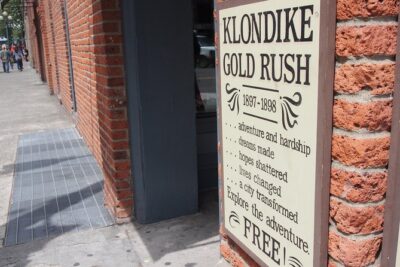
The route then moves into the story of the Klondike Gold Rush. You stop at the Seattle official National Park museum that explains how the gold rush transformed Pioneer Square into a boomtown in the 1890s. This is one of the clearer “why Seattle looks like Seattle” moments, because you get a sense of how a waterfront city became a magnet for people and money fast.
Habitat Beach, Colman Dock ferries, and the working-waterfront stops at Pier 55 and Pier 54
Back closer to the waterfront, you can picture Seattle’s modern reinvention at Pioneer Square Habitat Beach. The tour describes it as a new urban beach created for the waterfront revitalization project, and it is a free stop that lasts only about 5 minutes. That quick timing is useful because it gives you a little break without turning the tour into a long waiting game.
Then you glide past the Washington State Ferry Terminal at Colman Dock, including the Kitsap Ferry crossings to Bainbridge and Bremerton. Even if you do not ride a ferry, seeing a major terminal up close helps you understand Seattle’s daily rhythm. The waterfront is not just scenery, it is transportation.
Right after, the tour points out a fireboat heritage site built in 1912, originally created for a time when fireboats protected bustling docks and timber piers. The working waterfront still depends on fireboats as part of maritime heritage, and that context makes the waterfront feel real. It also helps your brain connect today’s sightseeing to older practical needs.
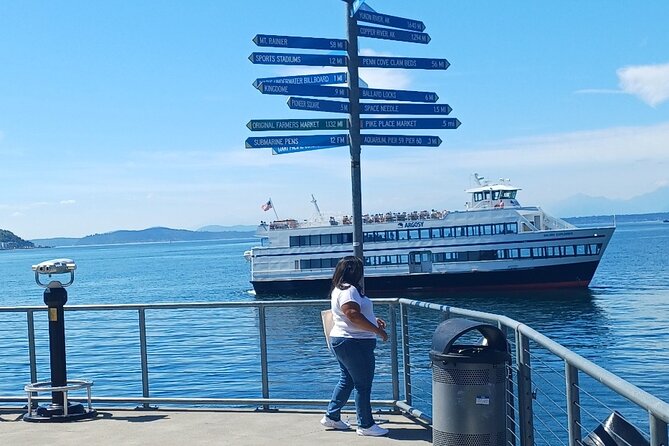
Pier 55 brings in Argosy Cruises and Seattle stores. The tour has you wave at Argosy harbor tour boats that have been showing Elliott Bay to visitors since 1949. This is where the waterfront becomes a layered experience: you have cruise history, shopping, and piers all running at once.
Finally, you reach Pier 54, which brings the classic Seattle character in a very direct way. The stop includes Ye Olde Curiosity Shop, with strange local-style treasures like mummies and shrunken heads, and then it moves to Ivar’s Acres of Clams. Ivar’s is described as a legendary Seattle seafood stand, and you get about 20 minutes here with the admission listed as free. This is one of the best moments to refuel while you still feel like you are part of the waterfront scene, not separated from it.
Rain in the forecast or not, these run out of Seattle too:


Price and value: why $49 feels fair for a one-hour scooter tour
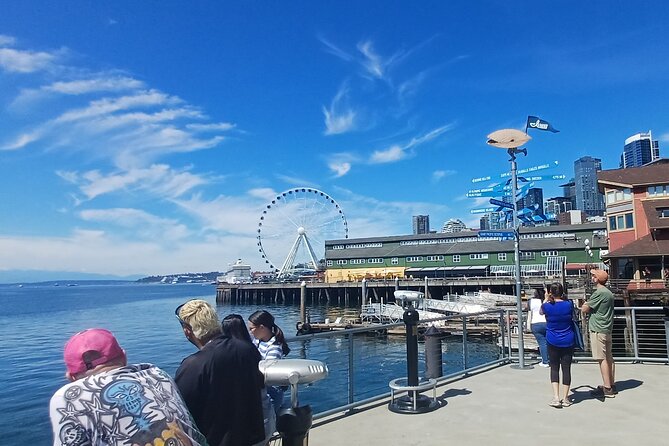
At $49 per person for about an hour, this tour can feel like a deal if you want three things at once: a guided route, an electric scooter, and a quick sampler of multiple waterfront “anchors.” You are paying for the convenience of not figuring out how to connect piers and viewpoints on your own, plus the guide’s headset delivery that keeps you engaged without constant stopping.
Here is the practical value math:
- The ride gives you broad waterfront coverage without the effort of walking a long stretch.
- You get context at many stops, including architecture and pop culture references like the Edgewater and Pier 70.
- You also get optional extra time at the Great Wheel, which is ticketed separately, so you control how much you want to spend beyond the base tour price.
The one caution on value is that not every stop is a full attraction time. Some are short look-by moments with photo angles and quick context. If you are the type who likes to linger for 45 to 90 minutes per place, you might feel a bit compressed. If you are okay with short stops and a guided highlights approach, the $49 price can make a lot of sense.
Who this scooter tour suits best, and who should consider something else
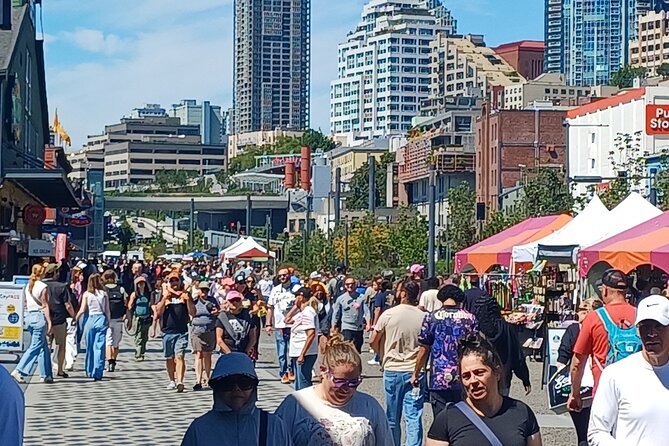
This is an easy-to-ride electric scooter experience, and the listing says most travelers can participate. That makes it a good option for people who want a fun waterfront activity that does not require special athletic ability. It also fits first-time visitors who want a focused way to hit key waterfront areas without planning dozens of separate stops.
It is also a smart match for locals doing a fun day of play. One review-style sentiment included the idea of playing tourist in your own state, and I get that. The route mixes things you might only know as trivia into real places you can see from the water side.
Who might want to skip it? If you want deep museum time at the aquarium or long, unhurried wandering in each neighborhood, a one-hour scooter format may frustrate you. Also, if small scooters would bother your comfort level, you should mentally prepare for a more compact feel than bigger street models.
Should you book the Seattle Waterfront Electric Scooter Tour with Great Wheel?
I would book it if you want a fun, fast way to connect Seattle’s waterfront dots, from the Great Wheel and Aquarium area to ferry terminals, tall ships, pop culture landmarks, and Pioneer Square story stops. The guide experience seems to matter here, especially when the narration is delivered with a headset and the guide can pace the group so it still feels playful. I also like that there is at least one built-in moment for a classic Seattle food break, since these tours can often be all sight and no satisfaction.
I would skip it if your idea of a great tour is slow travel with lots of time at each attraction, or if you strongly prefer walking routes over scooters. Otherwise, this one works well as an opener for a waterfront day, or as a standalone activity when you want something different from buses and walking.
FAQ
How long is the Seattle Waterfront Electric Scooter Tour?
It is about 1 hour long.
Where does the tour start?
The tour starts at Miner’s Landing Pier 57 at 1301 Alaskan Wy, Seattle, WA 98101, USA.
Is the Seattle Great Wheel included in the tour price?
No. The Great Wheel ride is optional, and the admission ticket is not included.
Is the Seattle Aquarium Ocean Pavilion included?
The Ocean Pavilion is listed as a stop near Pier 59, but the tour details provided do not say aquarium admission is included.
How many people are in each tour?
The tour has a maximum of 6 travelers.
Does Pier 54 include admission?
Yes. Pier 54 includes Ye Olde Curiosity Shop and Ivar’s Acres of Clams, and the admission ticket is listed as free.
What is the cancellation policy?
You can cancel for a full refund up to 24 hours before the experience starts. If you cancel within 24 hours, the amount paid is not refunded.
Written up lately around the Sound
- Seattle Customized Private Tour
- Enchanting Zipline , Camano Island and Deception Pass Tour
- Full Day Seattle’s W2 Tour – Wineries and Waterfalls
- From Seattle – Private Mt Baker and Cascades Tour in SUV★ 5.0 · 1 review
- Museum of Glass and Thea Foss Waterway Walking Tour★ 5.0 · 1 review
- Seattle: Longmire in Mount Rainier Winter Day Tour★ 5.0 · 1 review
- Woodinville’s Downtown Wine Tasting Pass★ 5.0 · 1 review
Tours, compared.
Beneath The Streets Underground History Tour
Read our review →