
Reviewed · WALKING TOURS
Welcome to Seattle Walking Tour
Downtown Seattle gets explained fast. This tour strings together the city’s big landmarks and lesser-known corners in one smooth loop, from Pioneer Square up through Seattle Center and ending at KEXP. You also get the kind of context that helps the city click, not just a list of stops.
What I like most is how the route balances early Seattle, immigrant neighborhoods, and modern downtown life in one outing. A second favorite is the included monorail ride, which breaks up the walking and makes the Seattle Center section feel like a real mini adventure.
One consideration: some major attractions are viewed from the outside, and tickets for museums or the Space Needle are not included. So plan a little extra budget if you want to go inside after the tour wraps, plus wear shoes for about 2.5 miles of walking.
In This Review
- Key things that make this Seattle walking tour worth it
- A smart 2.5-mile way to understand Seattle fast
- Pioneer Square to Occidental Park: early Seattle in plain language
- Waterfall Garden Park and the Klondike Gold Rush effect
- King Street Station and the role of transit
- The stadium-adjacent pass: SODO and Stadium District context
- Chinatown International District and Hing Hay Park: multiple communities in one lesson
- Union Station Great Hall and Seattle architecture you can’t ignore
- Seattle Public Library and Pike Place: photo time and city icons
- Seattle Center and the included Monorail: where the city changes pace
- International Fountain, Food Hall, and the KEXP finish
- Price and value: what $44 really buys you
- What to wear, how to pace yourself, and how to get the most out of it
- Should you book this Seattle Walking Tour?
- FAQ
- How long is the Seattle Walking Tour?
- Where does the tour start and end?
- What is included in the price?
- What is not included?
- How much walking should I expect?
- What if the weather is bad?
Key things that make this Seattle walking tour worth it
- A monorail ride is included, so you do not have to plan it or pay for it separately
- Short, focused stops keep momentum while you learn the why behind each place
- Multiple neighborhood chapters, including Chinatown International District and Japantown ties
- Seattle architecture gets treated like a story, not just a photo backdrop
- A small group size (max 15) makes questions and conversation easier
- The finish at KEXP adds a very local, music-and-radio vibe to the day
A smart 2.5-mile way to understand Seattle fast
If this is your first time in Seattle, you need two things: a quick map of where everything is, and a sense of how the city got that way. This walking tour delivers both. You walk roughly 2.5 miles in about 2.5 hours, with time at each stop to listen and ask questions, then move on.
The pace is friendly for most people with moderate mobility. It is not a museum crawl with endless indoor time, and it is not a sprint either. You should still expect some steps and a bit of uphill walking, especially if you are not used to city hills.
Because the group is capped at 15, the guide can actually keep track of people and answer questions without turning it into a lecture you cannot interrupt. That small-group feel is a big part of why this works so well as a first-day activity, or any day when you want a grounded overview without renting a car.
Pioneer Square to Occidental Park: early Seattle in plain language
You start at Pioneer Square, a great choice because it instantly anchors you in the oldest layer of downtown. Expect an orientation to the native people of the area, plus how the city was founded and what early Seattle looked like. Even if you already know some basics, you will likely leave with clearer context for why this neighborhood feels the way it does today.
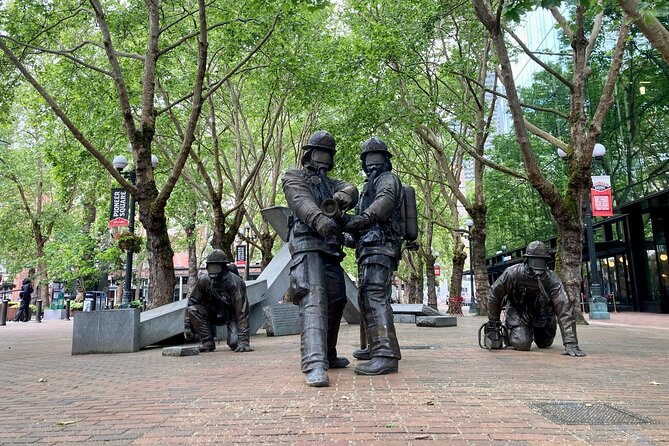
Next comes Occidental Park, a short stroll through an urban park lined with cafes and shops. The focus here is the Great Seattle Fire, and the real value is how the guide connects that disaster to rebuilding, layout, and what “downtown” became afterward. You get to stand in a central spot, then learn why it matters historically.
These first two stops are also practical. They set expectations for the rest of the tour, meaning you learn how the guide tells stories. You are not just looking at plaques. You are learning how one event reshaped where people lived, worked, and built the city.
A few other things to do around Seattle
- Seattle: Guided Underground Walking Tour
★ 4.6 · 2,144 reviews - Taste Pike Place Walking Food Tour
★ 5.0 · 930 reviews - Seattle Delicious Donut Adventure & Walking Food Tour
★ 5.0 · 772 reviews
Waterfall Garden Park and the Klondike Gold Rush effect
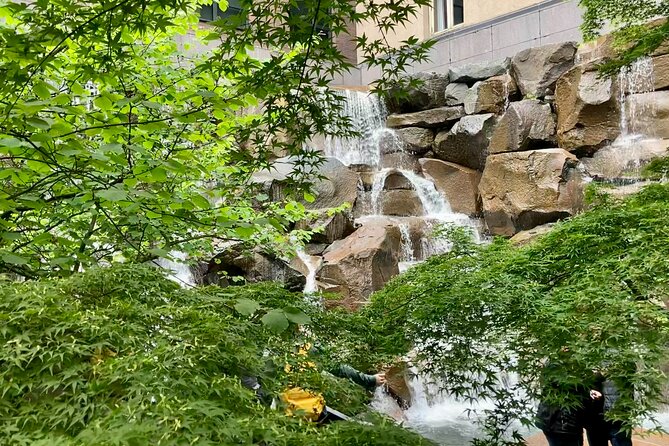
From there you head to Waterfall Garden Park, a tiny pause with a waterfall feature. The time here is short, but it does something useful: it links a pleasant physical break with a bigger historical wave, the Klondike Gold Rush.
The Gold Rush story matters to Seattle because it helped drive growth and economic momentum in the late 1800s. This is the kind of topic that sounds like a distant chapter until someone shows you how it connects back to Seattle’s rise. You also get a second stop with more direct Gold Rush impact discussion, keeping the theme coherent rather than dropping it and moving on.
This portion of the tour is where I think many people get that “oh, that explains the city” feeling. The guide is not treating Seattle like a modern tech brochure. It is a place with older cause-and-effect.
King Street Station and the role of transit
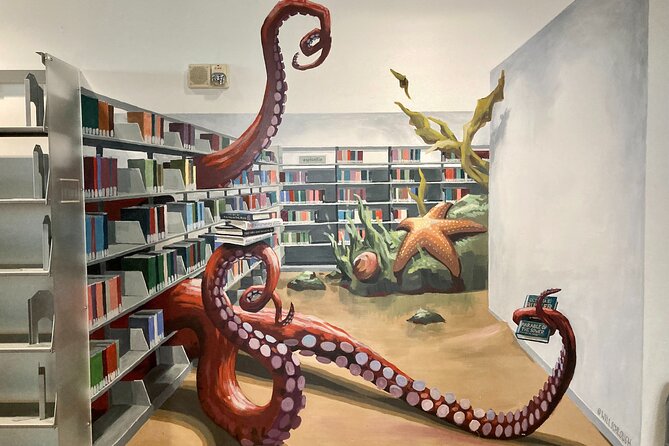
King Street Station is another quick stop with a lot of visual payback. You will see the Amtrak clock tower and get a sense of the station’s ornate interior. Even in a brief visit, transit hubs like this tell a clear story about how people and goods move through a city.
What I like here is the implied lesson. Seattle’s identity is tied to movement, whether that is trains, ferries, or the downtown streets that connect neighborhoods. When a guide points this out, your later stops make more sense because you start “reading” the city as a network.
This stop also helps the schedule work. You get a memorable landmark moment without losing time in traffic or long detours. That efficiency becomes important once the tour transitions to denser areas like Chinatown International District and Seattle Center.
The stadium-adjacent pass: SODO and Stadium District context
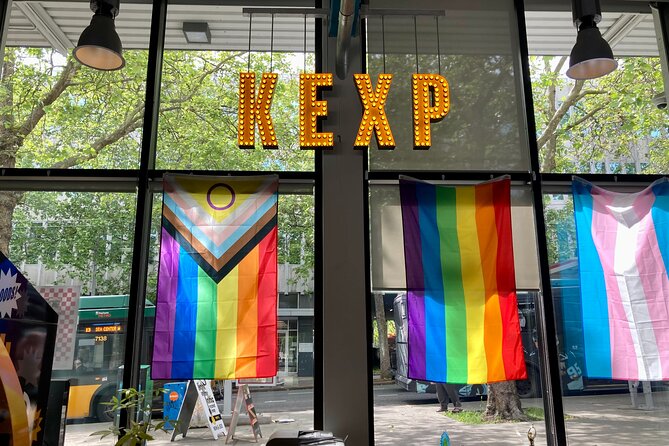
You will pass through the SODO neighborhood and the Stadium District, where the Seahawks play and where you will also see soccer-related sports space nearby. The tour does not enter the stadiums, so you are not walking in for an event or tour.
Still, this stop is useful. It shows how Seattle keeps evolving land use around key institutions. You get a sense of where sports culture fits into downtown, and how that connects to the city’s modern identity compared with the older Pioneer Square beginning.
It also works as a breather. After a few history-heavy stops, a quick geographic pass helps reset your brain before the next neighborhood chapter.
Chinatown International District and Hing Hay Park: multiple communities in one lesson
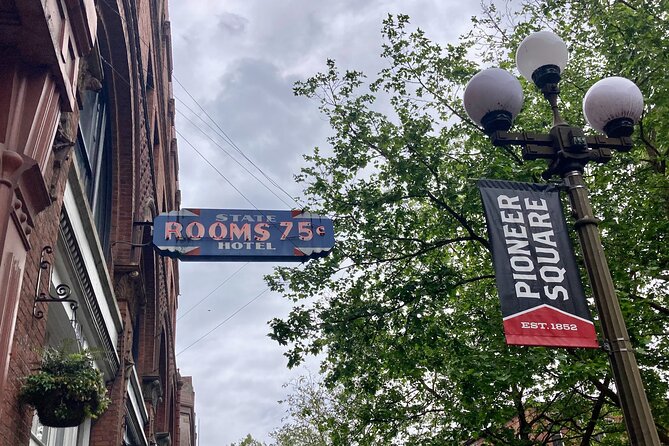
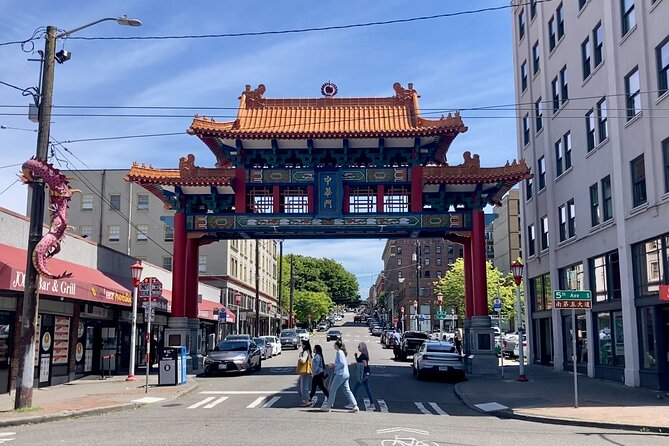
Then comes a shift that you should not rush through. At the Chinatown International District gate area, you learn about the ID, Japantown, and Little Saigon. This is where the tour feels like more than downtown sightseeing, because you are learning about Seattle’s diverse population as part of how the city developed.
The guide’s approach here matters. If you pay attention, you start recognizing the city’s layers beyond the mainstream tourist map. You also understand why this area has a distinct identity instead of being treated as just another “old streets” zone.
Next is Hing Hay Park, another short stop that continues the neighborhood story. Even without long time inside any space, the tour makes the point that community institutions and public spaces shape day-to-day life, not just history books.
I also like that this part is respectful in tone. It does not feel like a checklist of cultures. It feels like a guided walk through how Seattle grew into a place shaped by many groups making it home.
Rain in the forecast or not, these run out of Seattle too:


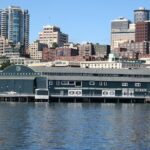
Union Station Great Hall and Seattle architecture you can’t ignore

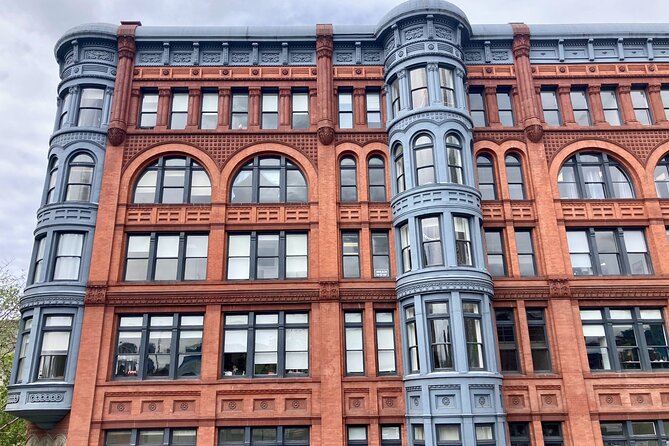
Union Station Great Hall is one of those moments where architecture does the explaining for you. You experience the grandeur of a now defunct treasure, which is a powerful way to talk about change over time. It also gives you a break from pure street-level history, because you can stand and take in the scale.
Right after that, you pass by several other sites linked to entertainment, design, and science, including places connected to Frank Gehry. You do not enter these, but the “see it from the outside” approach still helps you map where they are so you can plan a second visit later.
If you like architecture, this section is a strong argument for taking the tour early. It gives you a mental index of Seattle’s built environment. Then, when you later go to museums or see the Space Needle, you will understand how the city’s design language connects.
Seattle Public Library and Pike Place: photo time and city icons
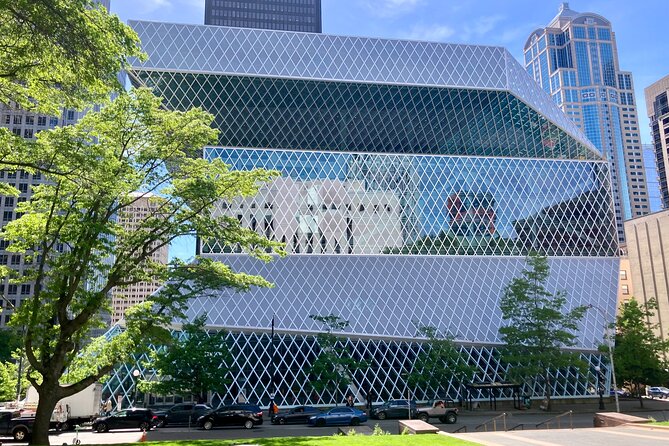
Seattle Public Library is a longer stop, about 20 minutes, and it earns that time. You get to view it inside and out, which is where this tour goes from “quick look” to “real experience.” The library is not just a building. It is one of the clearest expressions of civic priorities in downtown Seattle.
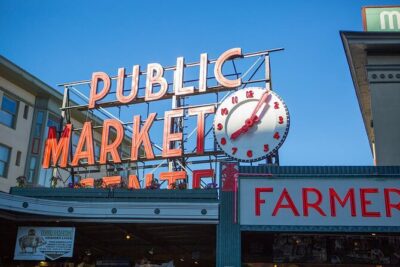
After that, you head toward Pike Place Market for a shorter walk past it, about 10 minutes. The goal is history and orientation. You learn what makes this market such a Seattle icon, then you walk through enough to know where you would want to return for a longer visit.
This is also one of the practical areas where the guide’s style really shows. In the guide experience people described, there is time for pictures at each stop. That matters because some tours rush you like you are holding a stopwatch. Here, you get a moment to capture what you came for.
Seattle Center and the included Monorail: where the city changes pace
This is where the tour adds energy. You take an included ride on the Seattle Center Monorail from Westlake Center to Seattle Center. You get a clear payoff from the ticket, because it turns what could be a long walk into a fun transit segment with big views and an easy change of rhythm.
Once you arrive, you get a walk through the grounds of the 1962 World’s Fair, now a civic culture center with museums, performance spaces, and theaters. This is the “okay, Seattle is not just downtown offices” moment. The Space Needle area is also in the mix, with the tour keeping it as a look from the outside.
Important practical note: tickets to museums or the Space Needle are not included. The good news is you can purchase them and visit after the tour concludes, and the guide can point you toward options.
You also pass by more attractions tied to the World’s Fair era and popular culture, but you do not enter them. So, if you are someone who loves “do it all” days, you will likely plan follow-up visits. If you prefer learning first and exploring later, this approach is very efficient.
International Fountain, Food Hall, and the KEXP finish
Near the end, you see the International Fountain and then move toward the Seattle Center Food Hall area. These are quick stops, but they add atmosphere. You are ending the tour in a part of Seattle that feels like it has events happening most days, even if you arrive on a quiet afternoon.
Then you finish at KEXP, Seattle’s independent radio station. The tour ends at the station’s gathering space, where you can grab a coffee you purchase yourself, peruse records, watch DJs in the booth, and listen to the broadcast. If you are lucky, you might catch a live performance by a touring or local band.
This ending is not just a fun surprise. It makes the whole tour feel more current. You started with foundations and fires and gold rushes, then you end with Seattle’s creative pulse, music, and media culture.
If you want a souvenir from the day beyond photos, this is it. Even if you do not know the station, you will likely leave feeling like Seattle has its own voice, not just its own landmarks.
Price and value: what $44 really buys you
At $44 per person for about 2.5 hours, the value depends on one key detail: the monorail ticket is included. That reduces the number of add-ons you would otherwise pay for, and it justifies the tour being more than a simple walk.
Most stops also have free access for what you do on the tour, since you are viewing and learning at outdoor points or areas without paying an entrance fee as part of the tour. Where costs can pop up is with the places you only pass by, or the museums and Space Needle you can visit after the tour.
On top of that, you are getting a local guide and a structured route that covers big downtown highlights plus neighborhood chapters. For many first-time visitors, that alone saves time and prevents you from missing the parts of Seattle that help everything else make sense.
What to wear, how to pace yourself, and how to get the most out of it
Do not overthink it, but do plan smart. You are walking about 2.5 miles and expect a moderate pace. Wear shoes with grip and bring a weather plan, because this is Seattle and conditions can change quickly.
If rain hits, I think you should still go. One nice thing about this tour style is that it is designed for outdoor learning and short stops. You will still get the stories and the key landmarks without the day collapsing into “museum only.”
Bring a phone with enough battery for photos, and have room in your schedule for a bit of follow-up. The guide typically gives recommendations for places to eat and things to do after the tour, and you can use that to plan the rest of your stay.
Finally, use the guide’s Q and A time. The best tours are the ones where you ask. In this case, the whole experience is built around conversation, and you can get restaurant tips and Seattle planning help right at the moment you need it.
Should you book this Seattle Walking Tour?
Book it if you want an easy first overview that mixes Pioneer Square history, neighborhood diversity like Chinatown International District, and a fun Seattle Center finish with KEXP. It is also a good pick if you like small-group interactions and want time to take photos at stops.
Skip it or plan differently if you want a tour that includes every major attraction inside the building. Several big places are pass-by only, and museum or Space Needle entry is not included. You can still see a lot, but you will probably want to budget for add-on visits later.
If you are trying to get oriented fast and then explore independently, this is a strong fit.
FAQ
How long is the Seattle Walking Tour?
It runs about 2 hours 30 minutes (approximately).
Where does the tour start and end?
It starts at Pioneer Square at 100 Yesler Wy, Seattle, WA 98104, and ends at KEXP, 472 1st Ave N, Seattle, WA 98109.
What is included in the price?
The price includes a local guide and the Seattle Center Monorail ticket.
What is not included?
Snacks are not included, and ticketed attractions you enter on your own are not included. Several sites are passed by without entering, and entry fees for those places are not included.
How much walking should I expect?
This is about a 2.5 mile walking tour, with time between stops. It is listed as suitable for travelers with a moderate physical fitness level.
What if the weather is bad?
The tour requires good weather. If it is canceled due to poor weather, you will be offered a different date or a full refund.
Written up lately around the Sound
- Seattle Customized Private Tour
- Enchanting Zipline , Camano Island and Deception Pass Tour
- Full Day Seattle’s W2 Tour – Wineries and Waterfalls
- From Seattle – Private Mt Baker and Cascades Tour in SUV★ 5.0 · 1 review
- Museum of Glass and Thea Foss Waterway Walking Tour★ 5.0 · 1 review
- Seattle: Longmire in Mount Rainier Winter Day Tour★ 5.0 · 1 review
- Woodinville’s Downtown Wine Tasting Pass★ 5.0 · 1 review
Walking Tours, compared.
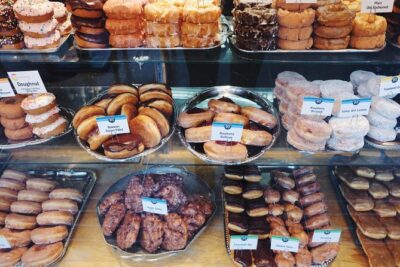
Seattle Delicious Donut Adventure & Walking Food Tour
Read our review →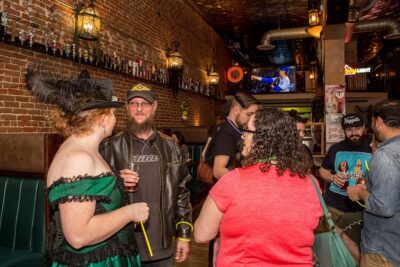
Haunted Seattle Booze and Boos Ghost Walking Tour
Read our review →
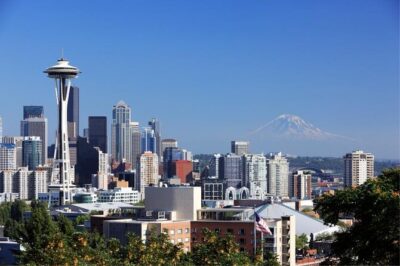
Space Needle & Seattle Center Small Group Private Walking Tour
Read our review →
Browse the lists this tour appears in